Top

海角视频

U of T News

Canada can play a leading role in the next wave of AI innovation: Waabi CEO Raquel Urtasun

鈥淭here is so much capital that we can attract and there is such incredible talent that we have here," Urtasun told U of T President Melanie Woodin during a BetaKit event at Toronto Tech Week
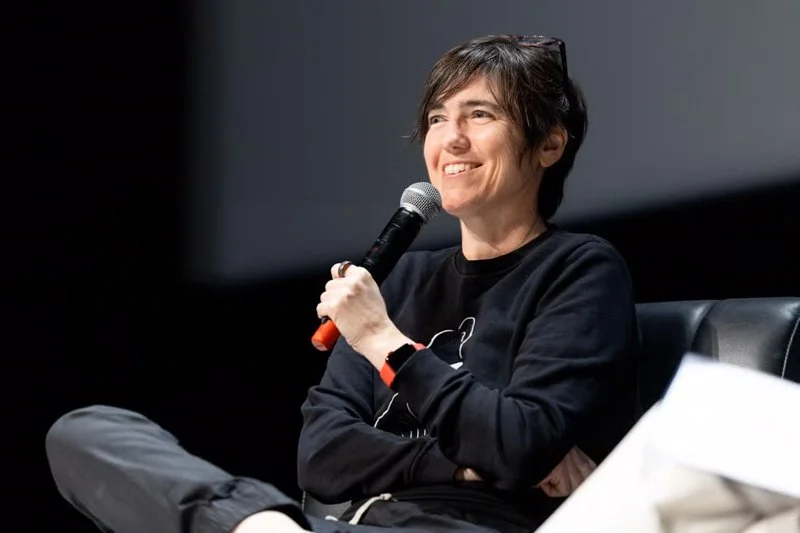
Close-up of a person seated on stage, holding a microphone during a talk, wearing a black sweatshirt and smartwatch against a dark background.

Raquel Urtasun, a U of T professor of computer science who is an expert in autonomous vehicle technologies, is the founder and CEO of self-driving trucking company Waabi, which recently raised up to US$1 billion (photo by Lilac Media / BetaKit)

From self-driving vehicles to new frontiers in robotics, the next wave of AI is moving beyond the digital world 鈥 and Canada has the necessary ingredients to chart a bold path forward.

Attendees at a BetaKit Most Ambitious town hall on May 25 heard how innovators, buoyed by the country鈥檚 strong university-based research system, could play a critical role in safeguarding Canadian sovereignty in this new era.

Raquel Urtasun, founder and CEO of self-driving vehicle company , said transportation is an example of a critical industry that鈥檚 undergoing a major shift.

鈥淭ransportation is something core where 鈥 quoting Evan Solomon, our minister of AI 鈥 鈥榃e need to make sure that we have control over our destiny,鈥欌 said Urtasun, who is also a professor of computer science at the University of Toronto, during a fireside chat with U of T President Melanie Woodin.

鈥淲e need to make sure we can move goods and people regardless of how geopolitics and the world evolve over the next few years.鈥

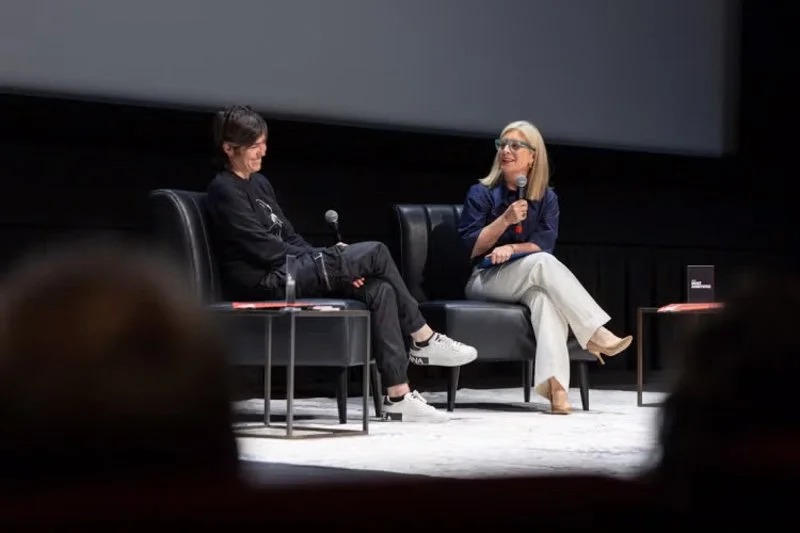
Two people seated on stage in armchairs, each holding a microphone and speaking during a live discussion, with a small table between them and a large screen in the background.

Waabi CEO Raquel Urtasun in conversation with U of T President Melanie Woodin (photo by Johnny Guatto)

Held at the TIFF Bell Lightbox, the event 鈥 part of 鈥 celebrated the innovators named in BetaKit鈥檚 Most Ambitious 2026 issue, . It featured remarks from tech, entrepreneurship and political leaders including Solomon, Canada鈥檚 minister of artificial intelligence and digital innovation, Toronto Mayor Olivia Chow and Christian Weedbrook, a former U of T postdoctoral researcher who is the founder and CEO of quantum computing company Xanadu, which recently made its debut as a public company.

Urtasun said Canada鈥檚 deep roots in AI research and talent offers an opportunity to lead the way in next-generation automotive technology. While the transportation landscape has long been controlled by large car and truck manufacturers, she said that鈥檚 changing with self-driving tech.

In addition to Waabi, Urtasun noted that Canada is home to several other key players in autonomous transportation including parts manufacturer Magna International and operating system developer Blackberry QNX. 鈥淲e have all the important pieces in order to really lead the transportation of the future ... versus 鈥楲et's just try to follow the U.S. and try to have something that's competitive here,鈥欌 Urtasun said.

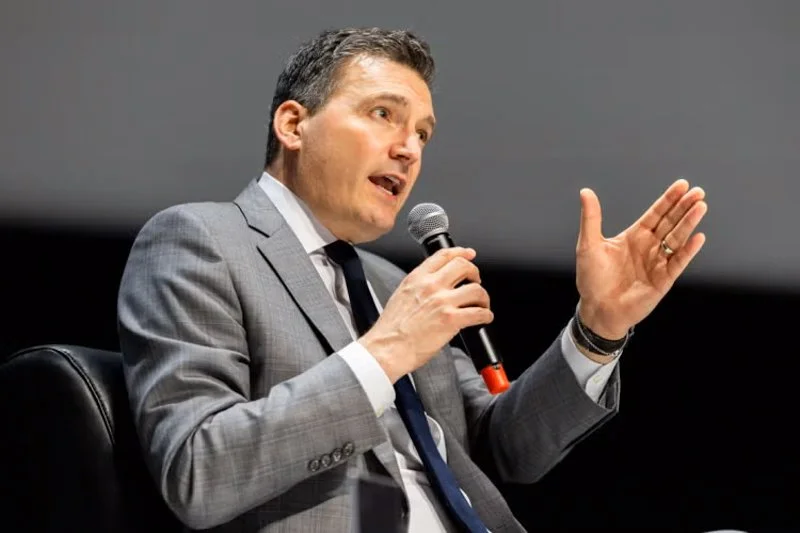
Person in a grey suit speaks into a handheld microphone on stage, gesturing with one hand during a panel discussion.

Evan Solomon, Canada鈥檚 minister of artificial intelligence and digital innovation, speaks at the BetaKit event at Toronto Tech Week (photo by Lilac Media / BetaKit)

Waabi has already made . In January, the company announced it raised US$750 million to accelerate commercialization of its self-driving technology 鈥 its investors include Volvo, whose driverless truck is powered by Waabi 鈥 in addition to US$250 million in milestone-based funding from Uber to expand into robotaxis.

Urtasun said she hopes to see more Canadian success stories in the sector. 鈥淭here is so much capital that we can attract and there is such incredible talent that we have here in Toronto, and in Canada in general, that we could become 鈥榯he鈥 player that dictates what it鈥檚 going to be.鈥

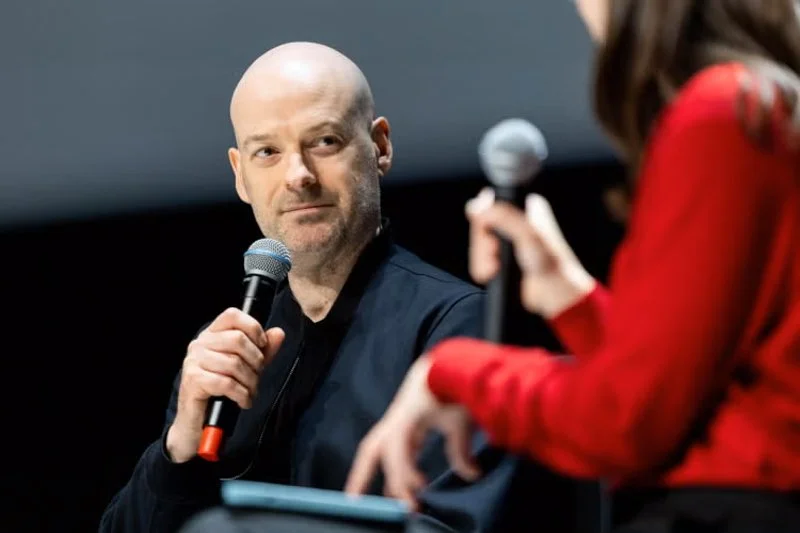
Close-up of a person holding a microphone on stage, looking toward another speaker in the foreground during a live discussion.

Christian Weedbrook, a former U of T postdoctoral researcher, founded quantum computing company Xanadu (photo by Lilac Media / BetaKit)

Urtasun offered a bold prediction: a majority of vehicles on the road would be 鈥淲aabi-powered鈥 within a decade. She also said there were many other potential applications for the company鈥檚 physical AI platform, ranging from elder care to mitigation of industrial accidents. 鈥淪elf-driving is the first big vertical,鈥 she said, adding that 鈥渘ot going all in on physical AI would be such a big miss for the country.鈥

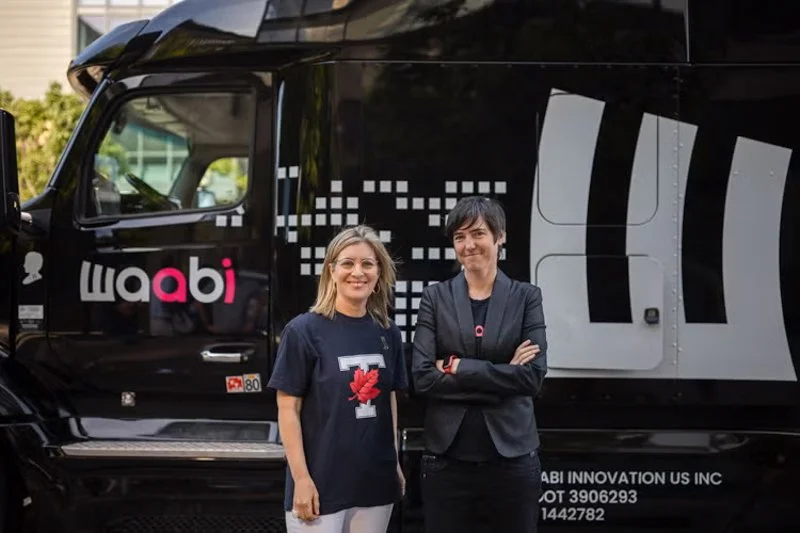
Two people stand in front of a black truck with 鈥渨aabi鈥 branding, posing side by side outdoors.

U of T President Melanie Woodin, then dean of the Faculty of Arts & Science, and Raquel Urtasun on campus with one of Waabi鈥檚 self-driving trucks (photo by Nick Iwanyshyn)

The conversation also explored the benefits of academics embarking on entrepreneurial ventures. Recounting Urtasun's proposal to take on a leadership role at Uber鈥檚 self-driving lab in Toronto in 2017, Woodin 鈥 then the dean of the Faculty of Arts & Science 鈥 said the arrangement provided U of T graduate students with a compelling opportunity to conduct research and innovation at the forefront of the field.

She added that , have also acted as entrepreneurial role models, inspiring students 鈥渢o want to follow that path.鈥

Urtasun, for her part, thanked Woodin and former U of T president Meric Gertler for their support.

鈥淪ince then, there are many faculty who have provided similar avenues for their students to not have to compromise between academia and industry 鈥 but do something that is better than either one of them alone.鈥


鈥 Original story by Rahul Kalvapalle at

A family affAIr: Three siblings 鈥 now U of T grads 鈥 use artificial intelligence to make a difference

Three siblings, all recent University of Toronto computer science graduates, are harnessing the power of artificial intelligence to drive innovation in health care, equity and global development.

Ilya Sutskever, a leader in AI and its responsible development, receives U of T honorary degree

From co-authoring seminal research papers to co-founding the research organization that developed ChatGPT, few people have been as influential in shaping the artificial intelligence landscape 鈥 and conversations around the technology鈥檚 responsible use 鈥 as Ilya Sutskever.

As a University of Toronto graduate student, Sutskever co-authored one of the most cited academic papers of this century and has since played a central role in driving the development and adoption of a technology that is transforming the economy, society and people鈥檚 everyday lives.

Today, for his foundational work and global impact as a computer scientist and artificial intelligence (AI) visionary, and for his outstanding service as an advocate of safe and responsible AI, Sutskever will receive a Doctor of Science, honoris causa, from U of T.

Born in Russia and raised in Israel, Sutskever became fascinated with computing at age five, when he first laid eyes on a computer 鈥 鈥淚 was utterly enchanted,鈥 鈥 and his interest continued into his teen years, when he emigrated to Canada with his family.

Even as a teenager, Sutskever envisioned building computers with human-like capabilities. 鈥淚 remember thinking a lot about the nature of existence and consciousness 鈥 about souls and intelligence. I felt very strongly that learning was this mysterious thing: humans clearly learn, computers clearly don鈥檛.鈥

Admitted into U of T鈥檚 math program out of Grade 11, Sutskever immediately immersed himself in upper-year courses. Graduating with an honours bachelor of science degree in mathematics in 2005, he went on to earn a master鈥檚 degree and PhD in computer science at U of T 鈥 the latter under the supervision of Emeritus Geoffrey Hinton, .

Hinton recalls being hugely impressed with Sutskever in their early interactions. , the 鈥済odfather of AI鈥 recounted giving Sutskever 鈥 who had knocked on his door and expressed an interest in joining his lab 鈥 a paper to read and being taken aback by the clarity of his responses. 鈥淗is immediate reaction to things were reactions that had taken experts in the field quite a long time to come up with,鈥 Hinton said.

Among Sutskever鈥檚 research projects at U of T was a program that used neural networks, which are computational models inspired by the human brain, to learn about language and generate text 鈥 a crude forerunner to ChatGPT. 鈥淚 give it an initial segment of text. And I say, from this text, keep on producing text that you think looks like Wikipedia,鈥 .

Then, in 2012, Sutskever, Hinton and another of Hinton鈥檚 graduate students, Alex Krizhevsky, developed AlexNet, a convolutional neural network that was trained to identify objects in a purpose-built image database with far more accuracy than competing approaches 鈥 effectively changing the AI game overnight. (The source code for AlexNet is to be in Silicon Valley.)

Two sets of two men stand facing each other on a stage wearing academic regalia

(Photo: Lisa Sakulensky)

Sutskever then joined Hinton鈥檚 spinoff company DNNResearch, which was later acquired by Google. Brought on as a research scientist at Google Brain, he contributed to yet another AI milestone: 鈥 and then beating a professional (human) player. He also co-developed sequence-to-sequence models, which are foundational to current machine translation systems.

In 2015, Sutskever co-founded OpenAI, serving as its research director and later as chief scientist. Under his leadership, OpenAI introduced the large language models that power ChatGPT, the generative AI chatbot now used by millions around the world for everything from drafting emails and sourcing recipes to writing computer code. And he played a central role in the creation of large reasoning models, which perform complex reasoning tasks.

Sutskever left the organization last year and co-founded Safe SuperIntelligence, a company that is developing safe AI systems with superhuman capabilities.

鈥淲e plan to advance capabilities as fast as possible while making sure our safety always remains ahead,鈥 Sutskever and co-founders .

Sutskever鈥檚 achievements have led to him being elected to the prestigious Royal Society in the UK and being named among TIME鈥檚 100 Most Influential People in AI in 2023 and 2024, among other honours.

Original story by Rahul Kalvapalle for

In his words: Geoffrey Hinton reflects on his Nobel Prize win

Geoffrey Hinton, University Professor Emeritus of computer science at the University of Toronto and winner of the 2024 Nobel Prize in Physics speaks about empowering curiosity-driven research, following your convictions and thinking about how to direct the use of technology for good during a virtual press conference.

Congratulations pour in for Geoffrey Hinton after Nobel win

Students, faculty and staff gathered at an event hosted by the department of computer science hosted by the 海角视频 of Computer Science celebrating University Professor Emeritus Geoffrey Hinton鈥檚 Nobel Prize in Physics win. Friends, colleagues and leaders in politics and business took to social media to express their congratulations for Hinton鈥檚 remarkable achievement.