
The Nobel laureate took part in a lively discussion with Cohere co-founder Nick Frosst at U of T's Convocation Hall
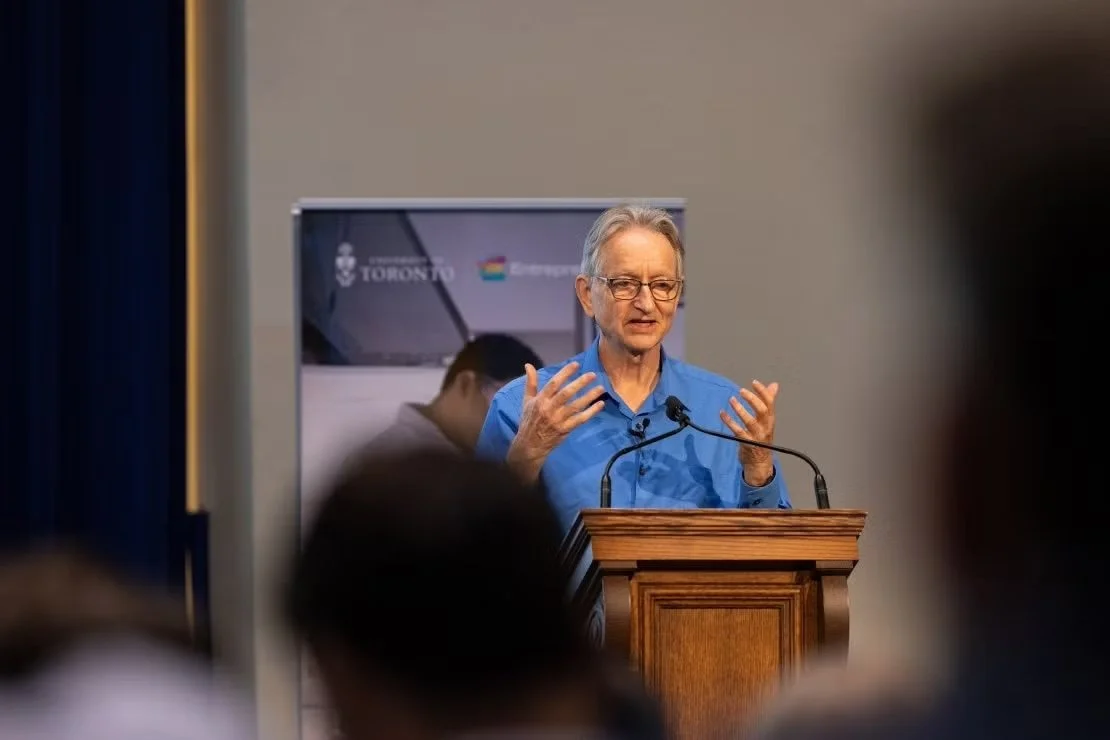
University Professor Emeritus Geoffrey Hinton, recipient of the 2024 Nobel Prize in Physics for his foundational work on AI, delivers a lecture hosted by U of T and presented by Desjardins during Toronto Tech Week (photo by Johnny Guatto)
Does artificial intelligence have subjective experience? Could AI outsmart and outmanoeuvre humans? What can Canada do to ensure it remains a leader in the global AI race that it helped kickstart?
These were some of the questions addressed by the University of Toronto鈥檚 Geoffrey Hinton 鈥� a emeritus of computer science and recipient of the 鈥� during a recent lecture and fireside chat held at Convocation Hall during the inaugural .
event saw the 鈥済odfather of AI鈥� put forth two of his most compelling and controversial contentions: that large language models (LLMs) such as ChatGPT and others understand language 鈥� rather than merely regurgitate it 鈥� and that AI could pose an existential risk to humanity.
The lecture culminated in a lively exchange between Hinton and his former prot茅g茅 Nick Frosst, a U of T alumnus and co-founder of AI language processing startup Cohere. The pair discussed and debated the promise and risks of the transformative technology.
On the subject of understanding, Hinton insisted LLMs can have subjective experience and are 鈥渜uite close to [humans]鈥� in terms of consciousness. Frosst, on the other hand, characterized such systems as 鈥渕ore conscious than a rock and less conscious than a tree.鈥�
鈥淚t is very difficult to come on stage and disagree with a Nobel laureate,鈥� he later joked, prompting laughter from the audience.
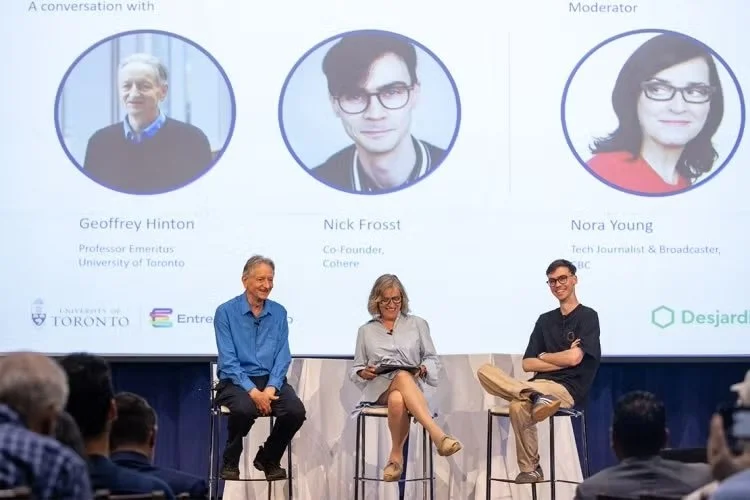
Geoffrey Hinton, left, and Nick Frosst, right, on stage with the CBC's Nora Young (photo by Johnny Guatto)
The conversation, moderated by CBC tech journalist Nora Young, was among the most anticipated at Toronto Tech Week, which ran from June 23-27 and from Toronto鈥檚 thriving AI and tech ecosystem.
鈥淎t the heart of that ecosystem sit our region鈥檚 excellent universities, with the University of Toronto the main catalyst,鈥� said U of T President Meric Gertler in his introductory remarks, pointing to tech magazine highlighting tech founders and companies 鈥� a third of whom were connected to U of T.
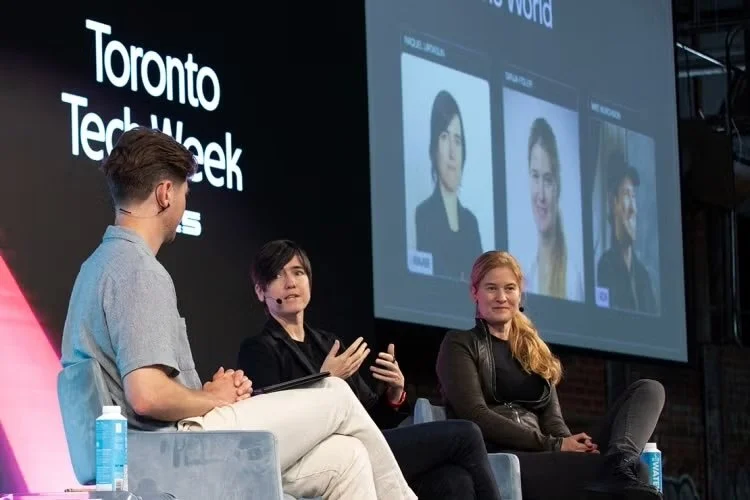
Alumnus Mike Murchison, left, co-founder and CEO of Ada, speaks with U of T researchers and AI experts Raquel Urtasun, centre, and Sanja Fidler during Toronto Tech Week鈥檚 海角视频coming event at Evergreen Brick Works (photo by Johnny Guatto)
President Gertler cited the 鈥� which Hinton co-founded 鈥� and the new as prime examples of U of T鈥檚 role as a key node in Toronto鈥檚 tech and innovation ecosystem. 鈥淭he potential for discovery, invention and innovation at U of T and in the Toronto region is huge and inspiring,鈥� he said.
The event also saw , with the financial institution set to continue supporting the Desjardins Speaker Series, the Desjardins Startup Prize 鈥� part of the annual U of T Entrepreneurship Week 鈥� and financial literacy workshops for a further three years.
During his lecture, Hinton traced the evolution of LLMs from his early experiments in the 1980s to today鈥檚 powerful systems. He then set out his argument that LLMs understand language and have subjective experiences, drawing on elements of philosophy, neuroscience and computer science to make his case.
He also reiterated his warning about the risks posed by AI, outlining two major concerns: the misuse of AI by bad actors, and the possibility of super-intelligent AI systems acting independently of human control.
Hinton later expressed concern about tech companies resisting AI regulations, comparing their stance to oil companies opposing environmental oversight. He noted that without adequate regulation, AI agents could cause problems in a number of ways. For example, he said, 鈥渢hey will be able to [invent] creative new ways of finding people鈥檚 passwords.鈥�
He also suggested AI systems could have a major impact on the job market in the coming years.
Frosst, for his part, agreed on the importance of AI safety, but took issue with Hinton鈥檚 view on the extent and specific nature of the risks.
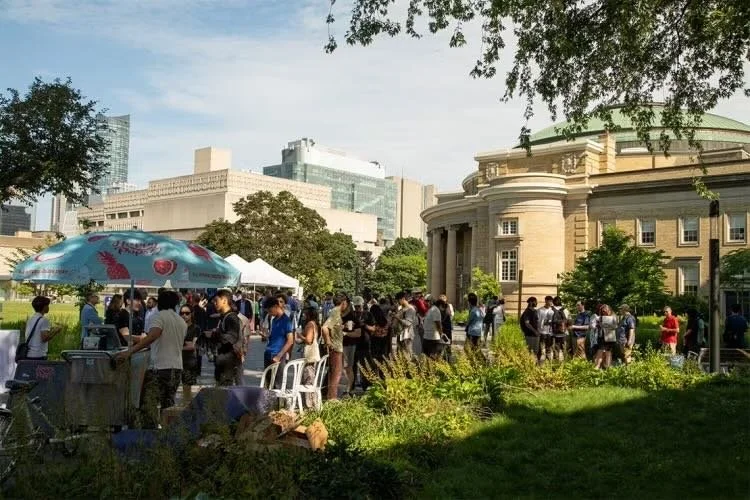
The Toronto Tech Week Lawn Party, hosted by U of T in partnership with Desjardins and Dell Technologies, took place following the Hinton-Frosst event at Convocation Hall (photo by Johnny Guatto)
The conversation also touched on Canada鈥檚 place in the global AI revolution. Hinton praised recent initiatives such as the , but called for more proactive engagement across the business sector and government.
Frosst voiced optimism about Canada鈥檚 AI future.
鈥淲e invented this technology,鈥� he said, noting Hinton鈥檚 foundational contributions to the field. 鈥淐anada has every right to be a leader in it.鈥�
鈥� Original story by Rahul Kalvapalle for