Top

海角视频

ARIA Showcase 2025: scaling innovation and shaping Toronto鈥檚 tech ecosystem

ARIA 2025 demonstrated the power of collaboration between academia and industry, showcasing research that drives innovation.

U of T establishes new Hinton Chair in Artificial Intelligence thanks to generous support from Google

Geoffrey Hinton at U of T鈥檚 St. George campus. Photo by Nick Iwanyshyn.

The University of Toronto is proud to announce that it has established the Hinton Chair in Artificial Intelligence, made possible by $10 million in funding from Google.

This new chair will honour the extraordinary legacy of University Professor Emeritus and Nobel laureate Geoffrey Hinton at U of T and Google by enabling the university to recruit and retain another brilliant, internationally recognized AI expert to make profound contributions to the field.

鈥淥n behalf of the university, I would like to express our deepest gratitude to Google for this wonderful investment,鈥 said Melanie A. Woodin, University of Toronto president. 鈥淭his new chair will enable us to build on Geoff Hinton鈥檚 historic contributions in artificial intelligence and to advance our record of transformational research in fields of crucial importance to the world.鈥

U of T is matching Google鈥檚 support with an additional $10 million in funding. This historic $20-million investment makes the Hinton Chair in Artificial Intelligence one of the University of Toronto鈥檚 most prestigious and generously supported advanced research roles, with substantial endowed support for a leading-edge AI researcher and additional funds to drive fundamental discoveries and insights 鈥 creating the intellectual underpinnings necessary to take AI to the next level.

鈥淕oogle is proud to partner with the University of Toronto in establishing this endowed chair, recognizing the extraordinary impact of Geoff Hinton, whose Nobel Prize-winning work laid the foundation for modern artificial intelligence,鈥 said Jeff Dean, chief scientist at Google DeepMind and Google Research. 鈥淥n a personal level, it was a delight to have Geoff as a colleague for more than a decade. This chair will empower world-class academic scholars to accelerate breakthrough innovations and drive responsible research that shapes a future where AI serves a common good.鈥

The Hinton Chair is the first in the university鈥檚 newly developed Third-Century Chairs program, a strategic effort established on the cusp of U of T鈥檚 bicentennial to attract and retain visionary scholars who can transform disciplines, shape global discussions, improve lives and strengthen Canada鈥檚 capacity to prosper. With competition for talent at an all-time high, the program will help the university amass critical expertise in areas essential to the country鈥檚 future 鈥 a key priority shared by the Canadian government, which recently announced a $1.7-billion commitment to attract top global research talent.

The Hinton Chair will also help U of T recruit, teach and train some of the world鈥檚 most talented students in the field, fuelling innovation in AI applications across medicine, engineering, discovery science, the humanities and more, expanding the university鈥檚 AI networks and international partnerships and sparking a new wave of promising AI startups.

Building on Hinton鈥檚 revolutionary research

The Hinton Chair in Artificial Intelligence aims to support the same brilliant, exploratory research that its namesake has pursued during his time at the University of Toronto and at Google.

After receiving his PhD in Artificial Intelligence from the University of Edinburgh in 1978 and completing several years of postdoctoral work in the United Kingdom and the United States, Geoffrey Hinton came to the University of Toronto in 1987 as a鈥痜ellow of the Canadian Institute for Advanced Research (CIFAR). There, along with several graduate students, he accelerated his expansive work on artificial neural networks as a potential pathway for advancing AI, developing core concepts such as: backpropagation algorithms; distributed representations; time-delay neural nets; mixtures of experts, variational learning and deep learning; and, most famously, Boltzmann machines.

In the 2000s, Hinton鈥檚 ideas began to yield extremely promising results. In March 2013, as more tech companies recognized the promise of artificial neural networks, Hinton joined Google as a vice president and engineering fellow, where he would stay for the next decade, splitting his time between the company and U of T.

Although many people have contributed to the current state of AI, arguably none was more important than Hinton, whose decades-long research forms the foundation of modern artificial intelligence and its myriad applications across nearly every discipline and sector. He is also responsible for the 鈥淗inton effect,鈥 which saw many of his students go on to lead AI advances in universities and companies across the globe.

鈥淚 am grateful for having been able to pursue my research at the University of Toronto, which afforded me the time and resources to develop the ideas that would eventually grow into the success of neural nets,鈥 said Geoffrey Hinton. 鈥淚 am encouraged that the Hinton Chair in Artificial Intelligence will support the next generation of AI research in the same vein, allowing ideas of great promise to germinate for the benefit of all humanity.鈥

Together with John J. Hopfield, Hinton won the Nobel Prize in Physics in 2024 for his foundational work in enabling deep learning and propelling the field to its current peak.

University of Toronto 鈥 a world leader in AI

Based at the Faculty of Arts & Science鈥檚 海角视频 of Computer Science 鈥 ranked 12th in the world according to the 2025 QS World University Rankings by Subject and a global leader in deep learning and generative AI 鈥 the Hinton Chair in Artificial Intelligence will leverage U of T鈥檚 and Toronto鈥檚 substantial and widely recognized strengths in AI.

鈥淚t鈥檚 thrilling to consider the astonishing possibilities of welcoming a globally leading AI researcher into this setting,鈥 said Interim Dean, Faculty of Arts & Science Stephen Wright. 鈥淎t the 海角视频 of Computer Science, the chair-holder will be surrounded by a remarkable concentration of scientific knowledge and creative skills, and a deep, proven track record of research excellence. It鈥檚 an ideal platform for charting new pathways and pursuing breakthrough discoveries in our shared goal of a brighter technological future for all.鈥

The University of Toronto is home to CIFAR AI Chairs and Canada Research Chairs in AI and has spurred several cutting-edge AI startups such as BlueDot (infectious disease intelligence), Waabi (autonomous trucks) and Deep Genomics (RNA-focused AI for disease detection). In addition to Hinton鈥檚 Nobel Prize, U of T鈥檚 faculty members and graduates have earned many other distinctions, including two Turing Awards, two of the three Herzberg Gold Medals ever awarded to computer scientists, and 15 Sloan Research Fellowships.

The university also consistently attracts and trains the best and most diverse cohort of undergraduate and graduate students from around the world, with hundreds pursuing AI-related studies across the university.

鈥婭n addition, U of T is home to an array of AI-focused research initiatives such as the Acceleration Consortium, the Schwartz Reisman Institute for Technology and Society, the Data Sciences Institute and the Temerty Centre for AI Research and Education in Medicine. The university also maintains a close partnership with the Vector Institute, a globally renowned organization co-founded by Geoffrey Hinton that empowers researchers, businesses and governments to develop and adopt AI responsibly.

An impactful partnership: Google and U of T

Establishing the Hinton Chair in Artificial Intelligence is the latest instance of U of T and Google鈥檚 longtime partnership in supporting discovery-based research. Over the years, Google has engaged many AI-focused U of T alumni and academic leaders, including Hinton, and the two organizations are founding partners in Toronto鈥檚 Vector Institute. Previous funding from Google has helped position the University of Toronto as a preeminent centre for advanced research in AI, and this new chair will greatly expand this impact.

鈥淲e are extremely grateful to Google for partnering with us to establish a chair dedicated to cutting-edge research on the defining technology of our time, which will help generate societal and economic benefits for communities across the planet,鈥 said David Palmer, U of T vice-president, advancement. 鈥淗inton himself once said that real breakthroughs come from people focusing on what they鈥檙e excited about, and the Hinton Chair will honour this example by providing unprecedented support for the next era of elemental, curiosity-driven work in artificial intelligence.鈥

鈥 Original story by the

A&S alumni mentor students and recent grads at latest backpack 2 Briefcase industry night

Julie Chan speaks at a podium. A screen with an image that says "backpack 2 Briefcase" is visible in the background.

Computer Science alumna Julie Chan delivers her keynote address at the latest b2B career night.
(Photo credit: Bilal Khan)

Arts & Science students and recent graduates met alumni mentors for an evening of casual conversation and networking at the latest industry night 鈥 and they came away with great advice.

鈥淎s you move from backpack to briefcase, the one thing that can really set you apart is being willing to step outside, meet people and connect in real life,鈥 says Julie Chan, the keynote speaker and 海角视频 of Computer Science alumna.

The b2B program connects A&S alumni with students to help them make the transition from university to a rewarding career. Industry nights include a keynote address and casual conversations that give students the opportunity to explore their next career steps.

Chan, who earned her bachelor of science degree in 1982 as a member of , has made mentoring a top priority throughout her career and stayed connected to the 海角视频 of Computer Science. At b2B, she shared a story about coaching a mentee through a job interview, which led him to land a role at his dream company.

鈥淢entors are a gateway to wider networks; they will know other experts who can help you,鈥 Chan says. 鈥淒on鈥檛 hesitate to ask for introductions as I did when I was looking for work.鈥

The keynote address resonated with attendees of the event.

鈥淚 really liked Julie鈥檚 advice about stepping out and meeting people in person,鈥 says Christina Sun, a second-year studying political science, sociology and environmental studies as a member of . 鈥淚t鈥檚 good to build those human connections.鈥

U of T 海角视频 of Computer Science, Mitacs and Fields Institute announce new student mobility collaboration

The University of Toronto鈥檚 海角视频 of Computer Science, Mitacs and the Fields institute are launching a new student mobility collaboration, strengthening research ties with India.

海角视频 of Computer Science announces promotion of five faculty members

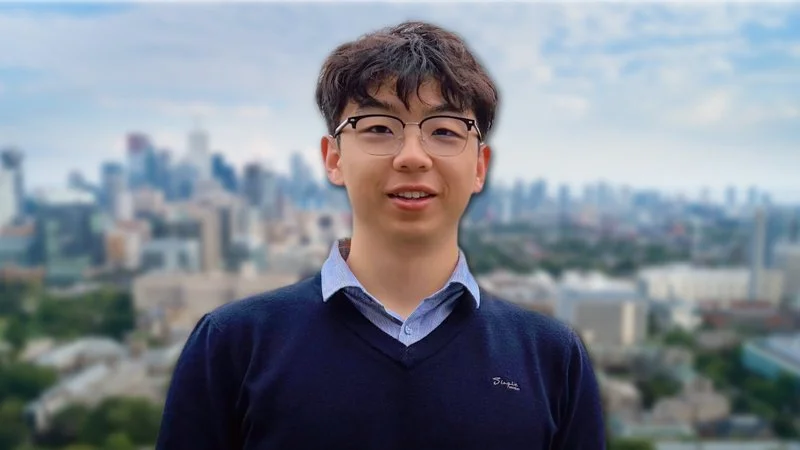
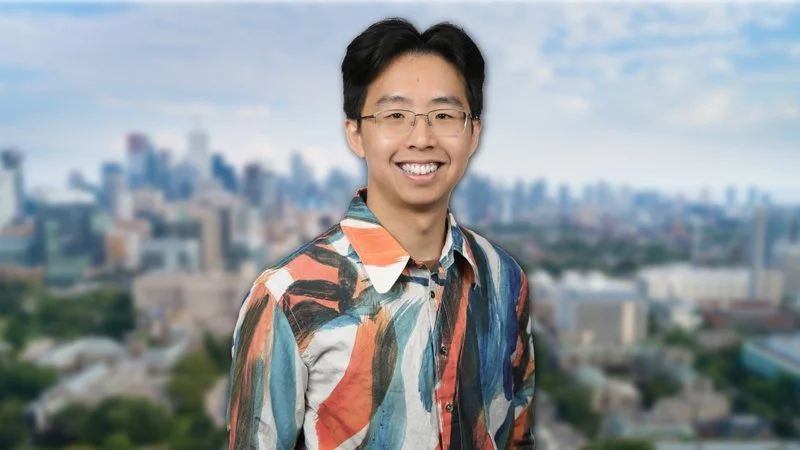
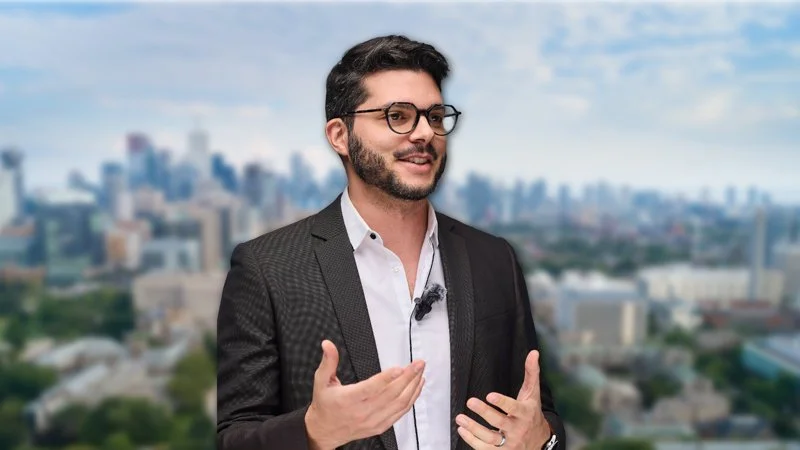
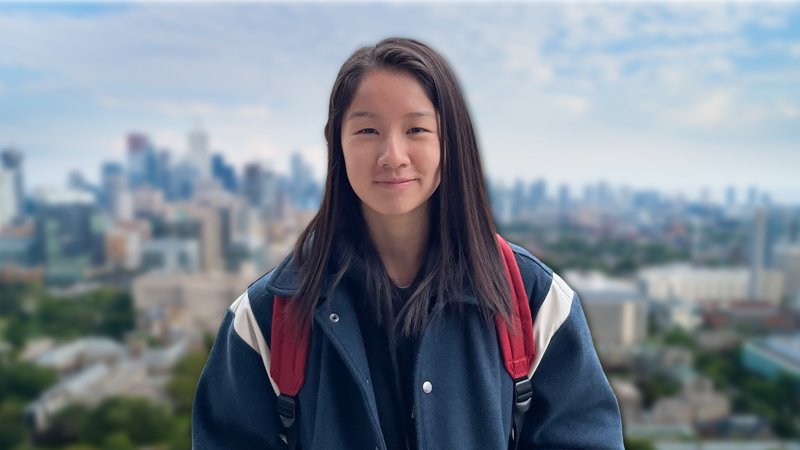
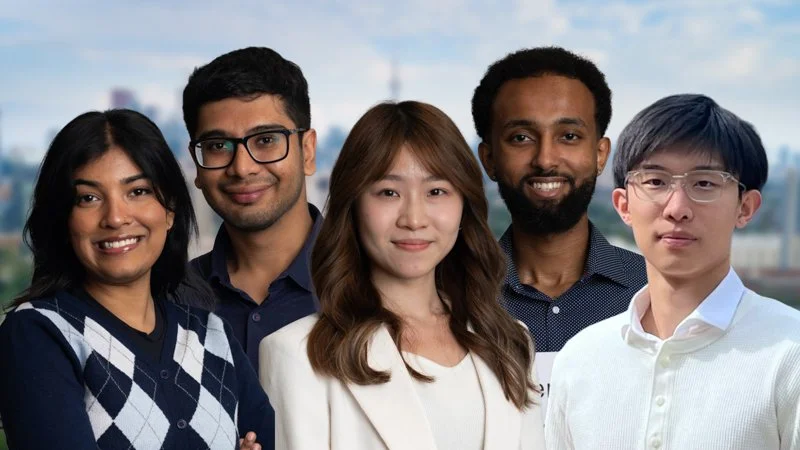
The 海角视频 of Computer Science is pleased to announce the promotions of the following faculty members, effective July 1, 2025:

  • promoted to the rank of Associate Professor with tenure

  • promoted to the rank of Associate Professor with tenure

  • promoted to the rank of Associate Professor with tenure

  • promoted to the rank of Associate Professor with tenure

  • promoted to the rank of full Professor

University of Toronto team discovers vulnerability at hardware-software boundary in cloud systems

From left to right: David Lie, director of the Schwartz Reisman Institute, Gururaj Saileshwar, assistant professor in the 海角视频 of Computer Science, and Yuqin Yan, a student at the 海角视频 of Electrical & Computer Engineering, discovered a security flaw in AMD鈥檚 cloud protection technology, revealing how interactions between hardware and software can expose sensitive data. (Photos: provided)

Cloud computing has become an essential part of our everyday lives, both personally and professionally. Whether it鈥檚 storing family photos, running a business or training cutting-edge AI models, we rely on remote servers to keep our data safe and secure and trust that it won鈥檛 be modified in any way.

Although storing information in the cloud exposes data to potential risks, hardware vendors like AMD mitigate these risks by collaborating with major cloud providers such as Amazon Web Services (AWS), Google Cloud and Microsoft Azure, to provide hardware-level protection that is meant to keep data secure and confidential even if the cloud provider experiences a security breach.

However, a team of University of Toronto researchers led by , director of the Schwartz Reisman Institute (SRI) and , assistant professor in the 海角视频 of Computer Science, and executed by , a student at the 海角视频 of Electrical & Computer Engineering (ECE), found a flaw in these systems. They discovered that the complex interactions between the software that the cloud providers run, and the hardware-level protection, leads to new security challenges and vulnerabilities.

鈥淯nlike most security vulnerabilities that are found in either the hardware or the software, what sets this discovery apart is that it was found in the interplay between the software and AMD鈥檚 hardware鈥 said Lie, who is cross-appointed to the 海角视频 of Computer Science. 鈥淚n this case, it was found when the hypervisor and central processing unit (CPU) interacted.鈥

We can think of a hypervisor as the 鈥渧irtual landlord鈥 of AMD鈥檚 chips. It is software that 鈥渞ents鈥 out computing resources, such as memory, to the cloud customer 鈥渢enants鈥 allowing various customer workloads to run securely, independently and confidentially on its CPU.

AMD鈥檚 confidential computing technology is designed to protect such tenants in the event that the landlord is controlled by a malicious entity; in other words, if it is hacked. It encrypts data in a way that depends on its location within memory, so if the same data is stored in two places, it is encrypted completely differently. That makes it difficult for the hypervisor to know anything about the data or track it across locations, increasing the security of the data.

鈥淭he system lets the hypervisor move data around to manage memory efficiently,鈥 explained Lie. 鈥淪o when data is relocated, AMD鈥檚 hardware decrypts it from the old location and re-encrypts it for the new location. But, what we found was that by doing this over and over again, a can learn recurring patterns from within the data, which could lead to privacy breaches.鈥

Vulnerabilities like this have the potential to affect people and organizations alike.

鈥淭hese are the kinds of unexpected consequences that come from the complexity of modern systems,鈥 said Saileshwar. 鈥淭he attack we discovered, which we call Relocate-Vote, shows how that complexity, especially at the boundary between secure hardware and untrusted software, can lead to serious vulnerabilities.鈥

The majority of the research was performed by ECE student Yuqin Yan. It also included now-graduated ECE student , ECE and SRI Postdoctoral Fellow , and UBC faculty member .

鈥淥ur role in academia is to identify vulnerabilities in real systems,鈥 said Saileshwar. 鈥淚 am proud of the work our team did. We are pleased that Yuqin was able to present this paper at the in Seattle, Washington.鈥

Going forward, Saileshwar notes that the consequences of hardware security are only going to grow and affect more organizations over time.

鈥淎s we move more of our data to the cloud, hardware security is becoming more important than ever,鈥 said Saileshwar. 鈥淗ardware is becoming more complex, it鈥檚 adding more features all the time, and we鈥檙e relying on its security features even more. We鈥檙e placing a lot of trust in hardware, making the research our team is doing at the University of Toronto into hardware security issues more impactful than ever.鈥

For more information about Relocate-Vote, please visit the .

by Andrea Wiseman for the Schwartz Reisman Institute

U of T CS faculty earn Ontario Early Researcher Awards for work in AI and imaging

Two U of T computer scientists have received provincial recognition for research that advances sustainable AI and next-generation imaging systems.

U of T researchers find GPU vulnerability with 鈥榗atastrophic鈥 effects on AI model accuracy

Researchers at the University of Toronto discovered a serious security risk in graphics cards (GPUs), which are now widely used to run artificial intelligence (AI) systems.

Al谩n Aspuru-Guzik honoured with Heinrich Emanuel Merck Award for Computational Sciences

The was awarded to on June 28, 2025, recognizing groundbreaking innovation in computational sciences.

Al谩n Aspuru-Guzik talks about chemistry and data technology in Lindau at the HEM Awards presentation.

Al谩n Aspuru-Guzik talks about the interplay of chemistry and information in Lindau. (photo: supplied)

According to a press release from the science and technology company Merck, the award honours 鈥渆xtraordinary contributions in the integration of advanced computational methods with scientific discovery.鈥 It celebrates current innovators in tribute to namesake Heinrich Emanuel Merck鈥檚 legacy of scientific curiosity and innovation.

Aspuru-Guzik is jointly appointed as Professor at the 海角视频 of Chemistry and the 海角视频 of Computer Science. Receiving the prize in Lindau, Switzerland, he said, 鈥淢y research interests are in areas that are poised to disrupt the chemical sciences. We have pioneered algorithms for near-term quantum computers, artificial intelligence and robotics for new materials. Recently, we have focused strongly on AI agents that do science.鈥

鈥淩eceiving the Heinrich Emanuel Merck Award is a testament to the exceptionally talented, motivated and collaborative Matter Lab research group that we have assembled at the University of Toronto.鈥

Laura Matz, chief science and technology officer at Merck, also spoke of cooperation and collaboration, 鈥淭oday we celebrate not just individual achievement, but a vision for a future where scientific breakthroughs transform lives and create new pathways for innovation.鈥

Aspuru-Guzik was lauded at the event as 鈥渁 leading researcher, at the intersection of quantum information, quantum computing, artificial intelligence, automation and chemistry, dedicated to accelerating scientific discovery and finding novel materials.鈥

鈥淗is work includes utilizing generative machine learning to optimize wave functions for quantum simulations,鈥 read the press release. 鈥淎dditionally, he has made significant contributions in creating self-driving laboratories (SDLs) that leverage Al and automation.鈥

鈥檚 innovative work, it noted, includes integrating quantum components into drug discovery pipelines, showcasing the potential of hybrid quantum-classical systems in generating viable drug candidates.

Aspuru-Guzik delivered a talk at the Lindau award ceremony, entitled, 鈥淭he materials for tomorrow, today.鈥 In it, he argued that the interplay between chemistry and information started four billion years ago and continues evolving thanks to the availability of AI algorithms. "Eventually they become autonomous research scientists."

鈥 Original story by Alyx Dellamonica for the

U of T computer scientists highlighted in BetaKit's 'Most Ambitious' issue

(Photo: Matthew Volpe)

More than two dozen startups and entrepreneurs from the University of Toronto community are recognized in first .

The online tech publication鈥檚 special issue aims to spotlight the 鈥渂ig swings鈥 taken in tech and innovation in Canada.

Of the 85 tech players mentioned in the issue, nearly one third have a connection to U of T.

Among the people and companies recognized with ties to the 海角视频 of Computer Science are:

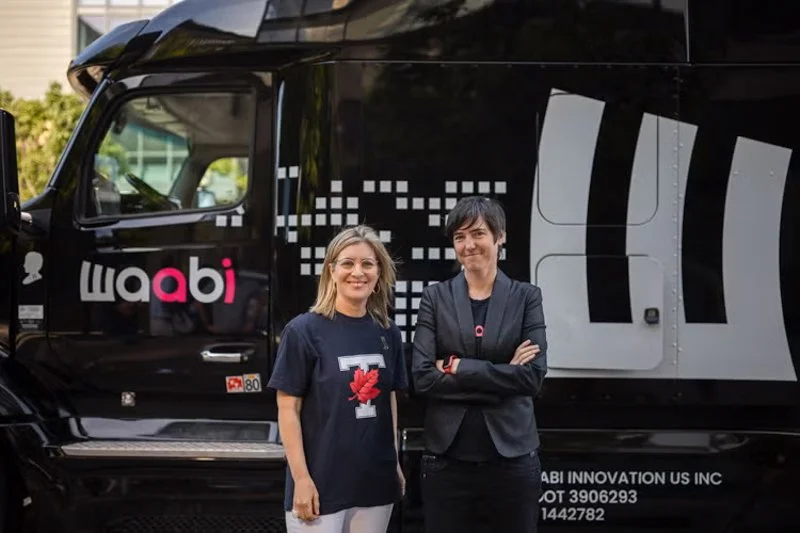
  • , the autonomous trucking company founded by Professor

  • , the enterprise AI company launched by alumni Nick Frosst and Aidan Gomez; and former computer science student Ivan Zhang

  • Associate Professor , founding member of

  • Alumnus and Ilya Sutskever, co-founder of , and more recently,

鈥淭his list demonstrates just how integral U of T-affiliated companies are to Canada鈥檚 innovation landscape in crucial fields ranging from sustainability and space tech to health care and transportation,鈥 says Leah Cowen, vice-president, research and innovation, and strategic initiatives.

鈥淭he university has long been committed to generating big ideas and game-changing research 鈥 and then providing the support necessary for ambitious entrepreneurs to move those discoveries out of the lab and into the world where they can have the most impact.鈥

With files from