Top

海角视频

Community

Meet the Class of 2026

Each year, our undergraduate and graduate students chart unique paths through computer science 鈥 shaped by research, community, creativity and real-world impact. From exploring interdisciplinary questions to mentoring peers and launching new ideas, they bring curiosity and initiative to every aspect of their work.

As they complete this chapter at the University of Toronto, they reflect on the experiences that defined their time here and the directions they鈥檙e heading next.

Undergraduate Class of 2026

Research Stream (MSc & PhD)

MSc in Applied Computing (MScAC)

Meet our MScAC grads and see how the program shaped their careers.

Canada can play a leading role in the next wave of AI innovation: Waabi CEO Raquel Urtasun

鈥淭here is so much capital that we can attract and there is such incredible talent that we have here," Urtasun told U of T President Melanie Woodin during a BetaKit event at Toronto Tech Week

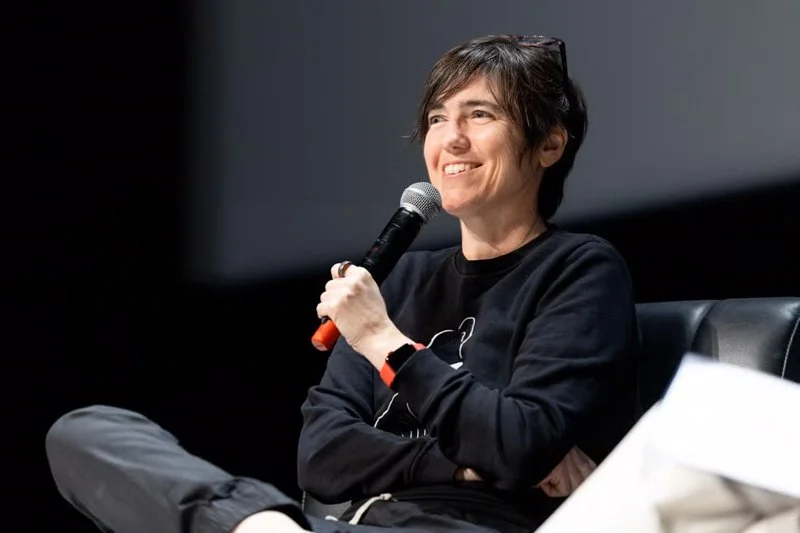
Close-up of a person seated on stage, holding a microphone during a talk, wearing a black sweatshirt and smartwatch against a dark background.

Raquel Urtasun, a U of T professor of computer science who is an expert in autonomous vehicle technologies, is the founder and CEO of self-driving trucking company Waabi, which recently raised up to US$1 billion (photo by Lilac Media / BetaKit)

From self-driving vehicles to new frontiers in robotics, the next wave of AI is moving beyond the digital world 鈥 and Canada has the necessary ingredients to chart a bold path forward.

Attendees at a BetaKit Most Ambitious town hall on May 25 heard how innovators, buoyed by the country鈥檚 strong university-based research system, could play a critical role in safeguarding Canadian sovereignty in this new era.

Raquel Urtasun, founder and CEO of self-driving vehicle company , said transportation is an example of a critical industry that鈥檚 undergoing a major shift.

鈥淭ransportation is something core where 鈥 quoting Evan Solomon, our minister of AI 鈥 鈥榃e need to make sure that we have control over our destiny,鈥欌 said Urtasun, who is also a professor of computer science at the University of Toronto, during a fireside chat with U of T President Melanie Woodin.

鈥淲e need to make sure we can move goods and people regardless of how geopolitics and the world evolve over the next few years.鈥

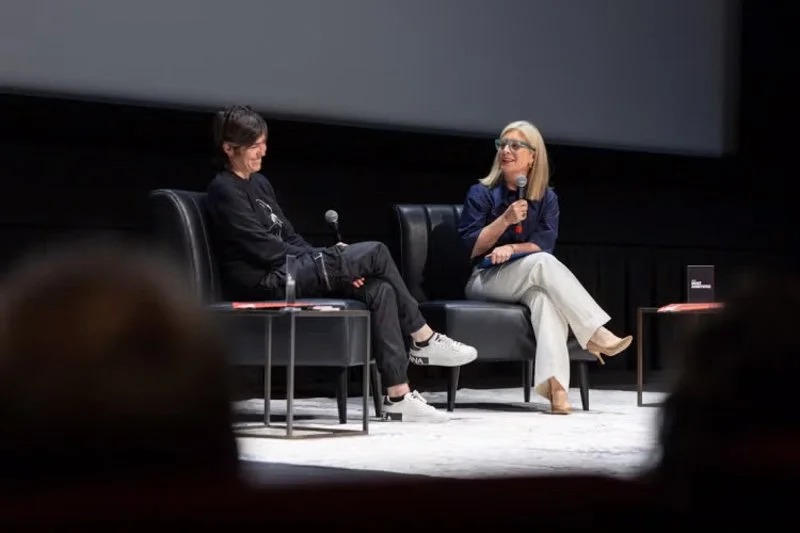
Two people seated on stage in armchairs, each holding a microphone and speaking during a live discussion, with a small table between them and a large screen in the background.

Waabi CEO Raquel Urtasun in conversation with U of T President Melanie Woodin (photo by Johnny Guatto)

Held at the TIFF Bell Lightbox, the event 鈥 part of 鈥 celebrated the innovators named in BetaKit鈥檚 Most Ambitious 2026 issue, . It featured remarks from tech, entrepreneurship and political leaders including Solomon, Canada鈥檚 minister of artificial intelligence and digital innovation, Toronto Mayor Olivia Chow and Christian Weedbrook, a former U of T postdoctoral researcher who is the founder and CEO of quantum computing company Xanadu, which recently made its debut as a public company.

Urtasun said Canada鈥檚 deep roots in AI research and talent offers an opportunity to lead the way in next-generation automotive technology. While the transportation landscape has long been controlled by large car and truck manufacturers, she said that鈥檚 changing with self-driving tech.

In addition to Waabi, Urtasun noted that Canada is home to several other key players in autonomous transportation including parts manufacturer Magna International and operating system developer Blackberry QNX. 鈥淲e have all the important pieces in order to really lead the transportation of the future ... versus 鈥楲et's just try to follow the U.S. and try to have something that's competitive here,鈥欌 Urtasun said.

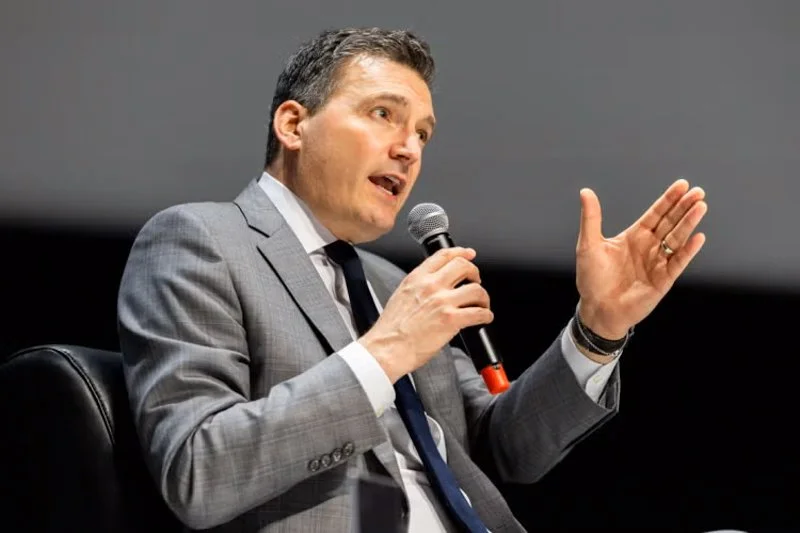
Person in a grey suit speaks into a handheld microphone on stage, gesturing with one hand during a panel discussion.

Evan Solomon, Canada鈥檚 minister of artificial intelligence and digital innovation, speaks at the BetaKit event at Toronto Tech Week (photo by Lilac Media / BetaKit)

Waabi has already made . In January, the company announced it raised US$750 million to accelerate commercialization of its self-driving technology 鈥 its investors include Volvo, whose driverless truck is powered by Waabi 鈥 in addition to US$250 million in milestone-based funding from Uber to expand into robotaxis.

Urtasun said she hopes to see more Canadian success stories in the sector. 鈥淭here is so much capital that we can attract and there is such incredible talent that we have here in Toronto, and in Canada in general, that we could become 鈥榯he鈥 player that dictates what it鈥檚 going to be.鈥

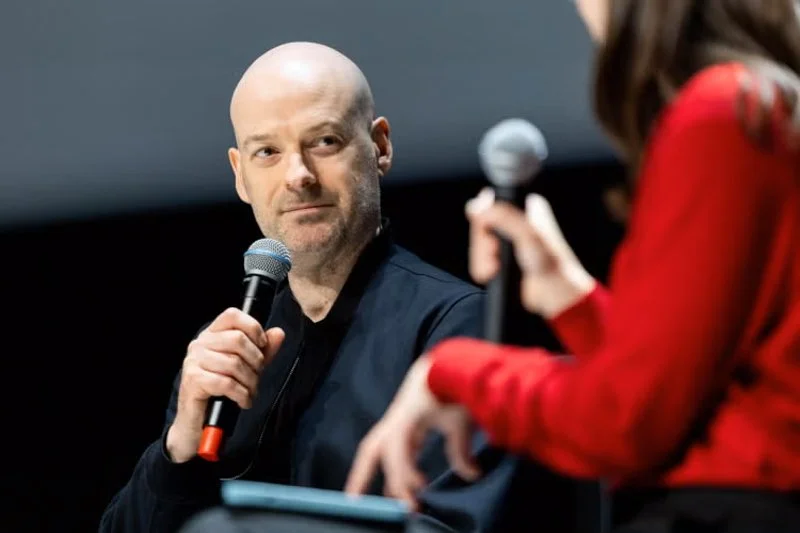
Close-up of a person holding a microphone on stage, looking toward another speaker in the foreground during a live discussion.

Christian Weedbrook, a former U of T postdoctoral researcher, founded quantum computing company Xanadu (photo by Lilac Media / BetaKit)

Urtasun offered a bold prediction: a majority of vehicles on the road would be 鈥淲aabi-powered鈥 within a decade. She also said there were many other potential applications for the company鈥檚 physical AI platform, ranging from elder care to mitigation of industrial accidents. 鈥淪elf-driving is the first big vertical,鈥 she said, adding that 鈥渘ot going all in on physical AI would be such a big miss for the country.鈥

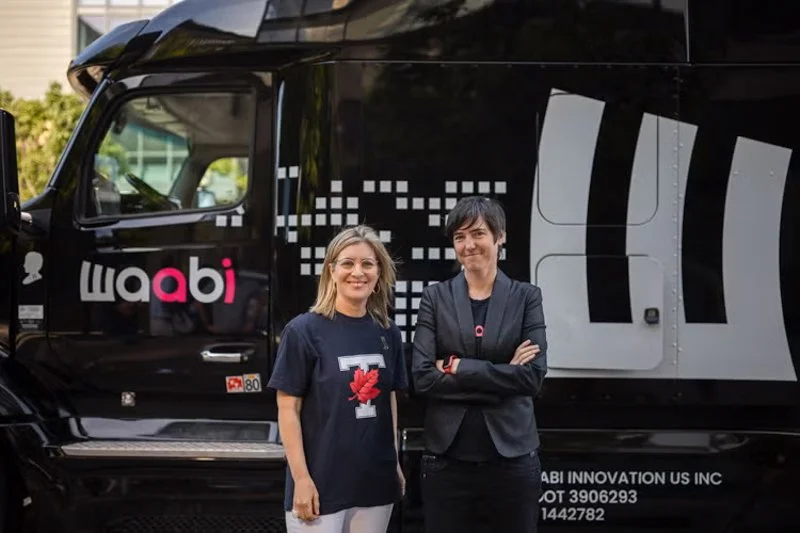
Two people stand in front of a black truck with 鈥渨aabi鈥 branding, posing side by side outdoors.

U of T President Melanie Woodin, then dean of the Faculty of Arts & Science, and Raquel Urtasun on campus with one of Waabi鈥檚 self-driving trucks (photo by Nick Iwanyshyn)

The conversation also explored the benefits of academics embarking on entrepreneurial ventures. Recounting Urtasun's proposal to take on a leadership role at Uber鈥檚 self-driving lab in Toronto in 2017, Woodin 鈥 then the dean of the Faculty of Arts & Science 鈥 said the arrangement provided U of T graduate students with a compelling opportunity to conduct research and innovation at the forefront of the field.

She added that , have also acted as entrepreneurial role models, inspiring students 鈥渢o want to follow that path.鈥

Urtasun, for her part, thanked Woodin and former U of T president Meric Gertler for their support.

鈥淪ince then, there are many faculty who have provided similar avenues for their students to not have to compromise between academia and industry 鈥 but do something that is better than either one of them alone.鈥


鈥 Original story by Rahul Kalvapalle at

CS student leads U of T at Putnam Math Competition and earns U of T Excellence Award

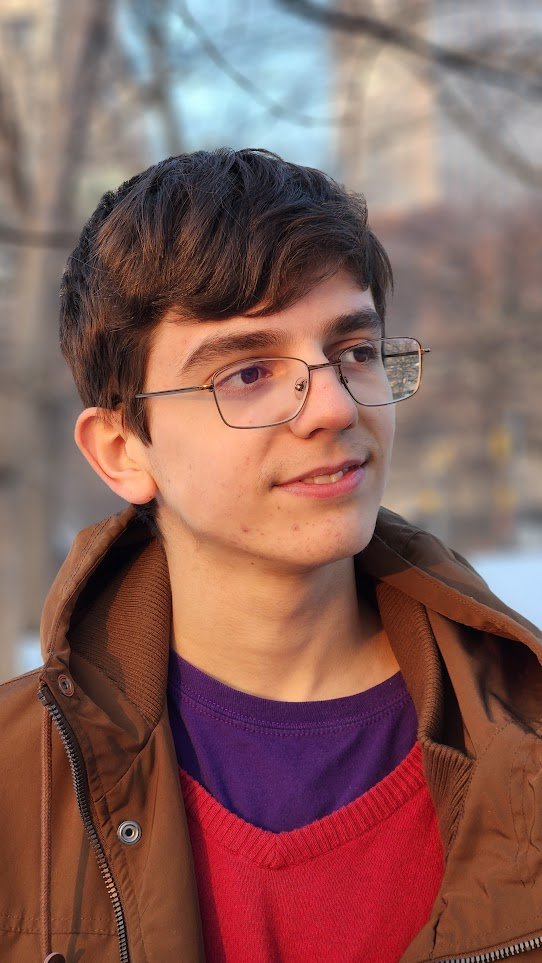
Boyan Litchev (Photo: Sanjana Iyer)

The math problem in front of Boyan Litchev felt familiar 鈥 something a professor might pose in class. For the next two hours, the second-year computer science and math specialist worked through it, erasing and starting over more than once. When he set down his pen with 20 minutes to spare, he felt satisfied. And for good reason.

Litchev was the highest University of Toronto scorer at the , a prestigious contest for undergraduate students across Canada, the U.S. and Mexico. The competition awards scholarships and cash prizes of up to $2,500 to top students and up to $25,000 to top schools.

Following the achievement, Litchev also became a (UTEA) recipient 鈥 a rare honour for a second-year student.

Finding meaning in the challenge

While the recognition is significant, for Litchev, competitions like Putnam are just as much about something else: a deeper connection to the subject.

鈥淭he biggest benefit of Putnam is the opportunity to get excited about math and discuss math with others,鈥 he says. 鈥淭here鈥檚 also something really fun about seeing a question and intuitively knowing why the claim would make sense, but working out the details and making sure your answer is coherent so you can share it with others. It creates a sense of community.鈥

Professor Ignacio Uriarte-Tuero understands that sense of community well. As the local organizer for Putnam, he helps students prepare through group study sessions. He sees the competition as a strong indicator of ability and potential.

鈥淪uccess indicates that students have a very good ability to solve problems and high standards of rigour because the marking system is very hard,鈥 he says. 鈥淧eople who have done well in Putnam have often gone on to be very good researchers later. There is a high correlation.鈥

Unlike more procedural problem-solving, where the path to a solution is often clear, Putnam-style questions require patience and a willingness to explore. Not knowing where a problem will lead and working through the ambiguity is part of the draw. At the same time, Litchev says coursework concepts helped inform his approach, highlighting how competition math and classroom learning reinforce one another.

鈥淭here were Putnam problems I solved because of what I had learned in the classroom,鈥 he says. 鈥淎nalysis and topology especially helped. I鈥檝e also heard people say that competition improves their mathematical maturity and helps them approach problems better, which also helps in class. The process of thinking about abstract math is transitive.鈥

From competition to research

That trajectory is already taking shape through Litchev鈥檚 UTEA fellowship, which will give him direct experience on a faculty-led research project. UTEAs are valued at a minimum of $7,500. Litchev says he鈥檚 looking forward to spending 16 weeks in the lab, working with his supervisor and peers on developing a cryptographic protocol.

鈥淚鈥檓 excited to be able to work on this project over the summer, and I鈥檓 already starting to think about how I鈥檒l approach it,鈥 he says. 鈥淚鈥檓 also glad the university is valuing this type of research and trusting me to do it. It鈥檚 a great opportunity.鈥

For developing interdisciplinary data sciences courses, faculty receive distinguished Northrop Frye Award

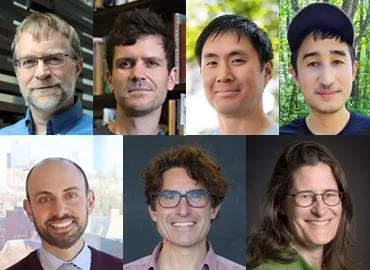
Top (l. to r.): Paul Gries, Adam Hammond, David Liu, Tomomi Parins-Fukuchi; bottom (l. to r.): Michael Widener, Nathan Taback, Mary Pugh.

The prestigious , one of the university鈥檚 , has been bestowed on the Interdisciplinary Data Science Course Development Team for the creation of three introductory data science courses for students across the faculty 鈥 particularly students without a traditional computational or quantitative background.

The team, which includes seven instructors from the humanities, social sciences, life and mathematical sciences, combined their disciplinary and pedagogical expertise to create learning experiences that give students skills applicable to any career, that nurture a critical approach to problems, and that equip them to think outside traditional methods of analysis. The results are innovative courses designed to prepare students to tackle today鈥檚 complex challenges.

The courses are: ENG286H1 鈥 Literature and Data; GGR274H 鈥 Introductory Computation and Data Science for the Social Sciences; and EEB125H1 鈥 Introductory Computation and Data Science for the Life and Physical Sciences.

The team includes:

  • Professor , Teaching Stream, Computer Science

  • Associate Professor Adam Hammond, English

  • Professor , Teaching Stream, Computer Science

  • Professor Tomomi Parins-Fukuchi, Ecology & Evolutionary Biology

  • Professor Mary Pugh, Mathematics

  • Professor Nathan Taback, Teaching Stream, Statistical Sciences

  • Professor Michael Widener, Geography & Planning

The initiative emerged from the Faculty of Arts & Science Computational and Data Studies Working Group that was established to address growing student demand for computational and data-related learning beyond the departments of Computer Science and Statistical Sciences.

U of T鈥檚 Awards of Excellence program has recognized exceptional students, faculty, librarians and administrative staff members since 1921. Though the criteria differ for each of the awards in the suite, recipients all share a commitment to enhancing the university experience of their peers and leave a significant impact on the university through their efforts.

鈥淭he award recognizes a deeply interdisciplinary and sustained collaboration that has transformed how students across Arts & Science encounter computation and data analysis,鈥 says , professor, teaching stream in the 海角视频 of Computer Science, who nominated the team.

鈥淭he sustained impact on student learning, combined with the team鈥檚 deep interdisciplinary collaboration and commitment to pedagogical innovation, exemplifies the values recognized by the Northrop Frye Award.鈥

According to Faculty of Arts & Science vice dean, undergraduate Randy Boyagoda, 鈥淭hese three courses demonstrate that when data science education is designed intentionally 鈥 grounded in accessibility, interdisciplinarity and ethical awareness 鈥 students from across the faculty eagerly and successfully engage with it.

"Students who take these courses will leave university with greater confidence in knowing how data science works, which will matter to their personal and professional lives and make them all the more willing and able to be good contributors to our shared public life,鈥 says Boyagoda, who is also the university鈥檚 provostial advisor on civil discourse and a professor in the 海角视频 of English.

The success and impact of the team鈥檚 work is reflected in a typical student鈥檚 feedback: 鈥淲ith its intersection with computer science and traditional English studies, ENG286 prepared me to think about how developing technologies such as AI and an ever-expanding digital marketplace and database can both enrich traditional legal views while also criticizing and promoting new ways to view precedents.鈥

Inside Tech@RBC: students gain insight, confidence and a clearer vision for their careers

U of T computer science and engineering students explored career paths, industry insights and new RBC鈥憇upported scholarships at the latest Tech@RBC Insider Series event.

Alumnus Liam Kaufman鈥檚 entrepreneurial path in digital health innovation

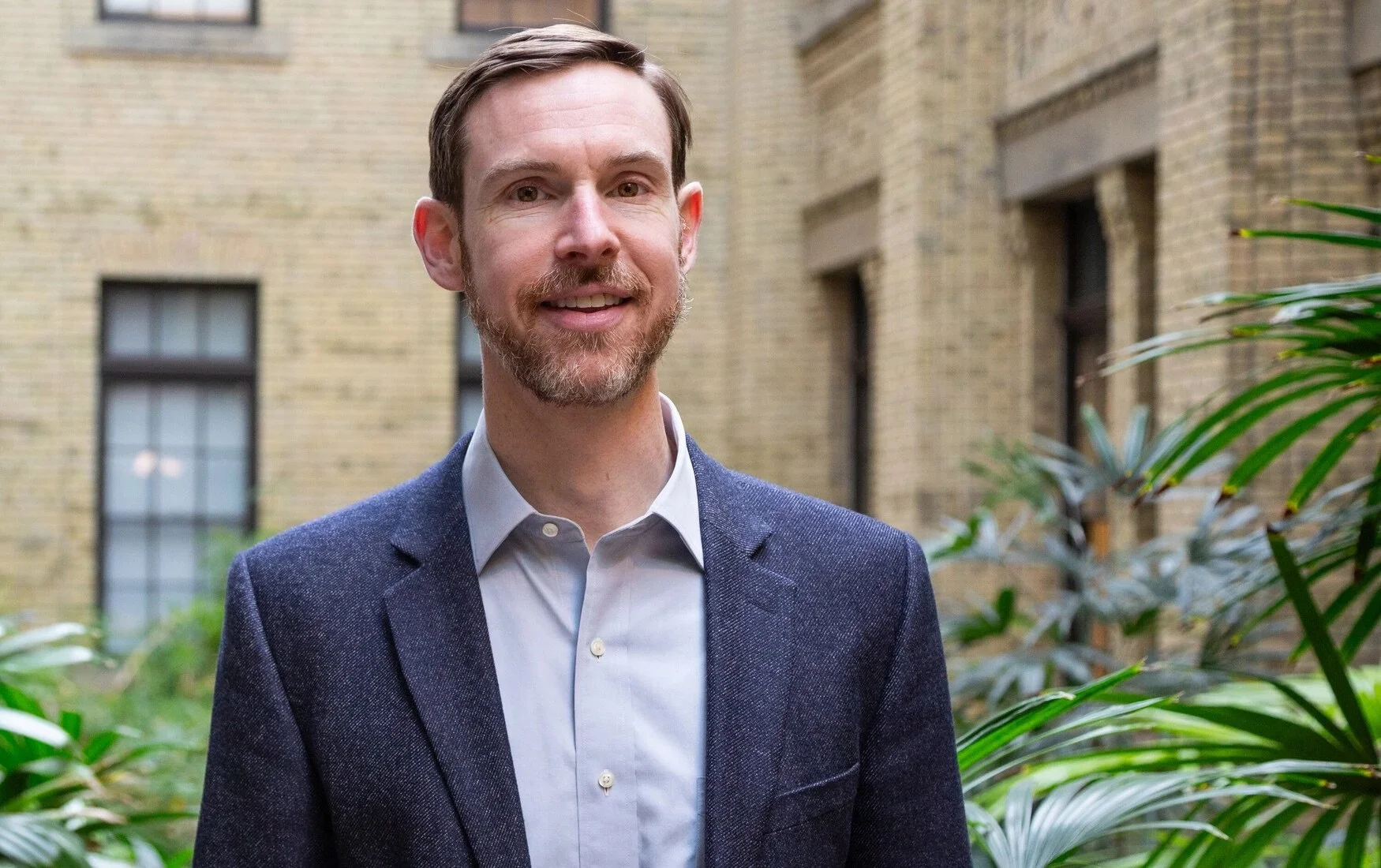
Liam Kaufman smiles facing the camera. A brick building and shrubs are in the background.

As the University of Toronto celebrates from March 2 to 6 鈥 a showcase of innovation, startup success and bold ideas across the tri-campus community 鈥 we are highlighting alumni who embody that entrepreneurial spirit. Liam Kaufman is one such graduate, translating cutting-edge research into impactful health technologies and building ventures that bridge science and industry.

Across roles as an entrepreneur, scientist, engineer and strategic leader, Kaufman has built a career focused on translating advanced AI and clinical research into real鈥憌orld health care tools.

After completing his BSc in psychology at Western University, Kaufman earned a master鈥檚 degree in medical science at the University of Toronto鈥檚 Faculty of Medicine (now known as the Temerty Faculty of Medicine) in 2008 and a BSc in computer science in 2011, also from U of T.

Kaufman has always had an entrepreneurial spirit. As a child he went door-to-door shoveling neighbours鈥 driveways for money and even made crafts to sell at his father鈥檚 birthday party. His first adult success came shortly after graduating from U of T, with 鈥 a tool for collecting anonymous feedback during class. The platform gained international media attention before being acquired by EventMobi.

Currently, Kaufman serves as executive vice president of product and academic at Cambridge Cognition, where he helps guide the company鈥檚 global strategy in cognitive assessment technologies and digital biomarkers. Before joining Cambridge Cognition, he was the co鈥慺ounder and CEO of Winterlight Labs, which develops speech鈥慴ased digital biomarkers for cognitive impairment and mental health (acquired by Cambridge Cognition in 2023).

We talked to Kaufman about his path to working at the intersection of neuroscience, machine learning and digital health innovation.
 

How did you become interested in neuroscience?

I did my undergrad at Western in psychology and kept gravitating to the science side 鈥攕tats, methods, functional MRI. I鈥檇 also been reading pop鈥憂euroscience books and was captivated by how scientists use tools and methodology to explore how we think and learn. After graduating, I worked at BC Children鈥檚 Hospital as an MRI tech/research assistant, which let me apply what I鈥檇 learned in a real clinical setting. I liked the rigour and objectivity of science, and neuroscience felt like the intersection of what I loved 鈥 plus I wanted to work with patients and see what I was learning in action, day to day.

For your postgrad, how did you land on the Institute of Medical Science at U of T?

I wanted something applied, and IMS put me in a hospital environment (Sunnybrook Health Sciences Centre) working directly with patients, not just in a theoretical or purely academic context.

Candidly, the stipend also mattered. Toronto isn鈥檛 cheap for grad students, and IMS had one of the highest stipends, which helped.

The program catered to clinicians and residents, so I didn鈥檛 have to TA and could focus on research and data collection. Working with (MD 鈥78, PGME Neurology) was formative: high rigour, high expectations. I learned to only say what I could back with evidence and got a lot of practice presenting to committees, which was great for building confidence and learning how to talk with experts who know more than you.

What did you study?

My thesis focused on a specific eye鈥憁ovement task called the anti鈥憇accade task. Normally, when something appears in your peripheral vision, you automatically look toward it. We trained people to look in the opposite direction, which requires executive control to inhibit that automatic gaze. Healthy people are generally good at this, but when the frontal lobes are damaged, the task becomes much harder. Alzheimer鈥檚 is usually thought of as a memory disorder affecting the temporal lobes, but what we showed was that people with Alzheimer鈥檚 and mild cognitive impairment had clear difficulties with this task 鈥 they were much more likely to look toward the stimulus. I did a meta鈥慳nalysis and published our findings, adding more evidence that Alzheimer鈥檚 involves impairments beyond memory.

What prompted you to pivot to computer programming?

I planned to do a PhD and had strong support. But after a late night prepping for a talk, I asked myself if that鈥檚 what I wanted for the next three to four years 鈥 especially given how competitive hospital scientist jobs are. Meanwhile, I鈥檇 taught myself enough programming for side projects and data analyses to realize I liked the challenge and the tangible problem鈥憇olving. Employment prospects also looked stronger, so I decided to bridge the two fields. I hadn鈥檛 taken math in years, so I blitzed grade鈥10 through grade鈥12 material in a few months to be adequately prepared for computer science at U of T. In retrospect, having both skill sets has been really useful.

How did you get your start as a digital health entrepreneur?

Right after graduating, I launched Understood.it. It got good press 鈥 CTV, Toronto Star, even the front page of TechCrunch 鈥 which gave me a taste of early traction. EventMobi acqui鈥慼ired us; they were more interested in the team than the product, and I led their mobile app group as a developer/manager.

I still wanted to get back to the neuroscience-computer science intersection, so in 2015 I met with who was a U of T faculty member at the University Health Network鈥檚 Toronto Rehabilitation Institute at the time. His expertise was in computational linguistics and natural language processing, and his research showed you could probably detect Alzheimer鈥檚 with about a minute of speech. I found the work intellectually captivating and I could see the potential for commercialization. I left my job, taught a computer science course to patch together income, and with two of Frank鈥檚 grad students we started Winterlight Labs that fall.

How has your medical science education at U of T helped you in your career?

Sandra鈥檚 mentorship taught me rigour: if I鈥檓 going to say something, I need evidence. As an entrepreneur, that translates directly to how I prepare for investors and customers 鈥攃hoosing words carefully, anticipating questions and backing up claims.

IMS also forced me into regular, polished presentations to advisory committees, which made me a better public speaker and more comfortable engaging experts.

Beyond training, the U of T ecosystem mattered. Winterlight went through Rotman鈥檚 Creative Destruction Lab and the Temerty Faculty of Medicine鈥檚 Health Innovation Hub (H2i). H2i made pivotal introductions that helped us get pharma traction and funding. U of T鈥檚 combination of strong medical research and strong AI created the right environment to build at that intersection.

How are you evolving your product and business now? What鈥檚 on the horizon?

The business exploded during COVID, but in 2023鈥2024 it was tough 鈥 biotech funding dropped and studies slowed. In 2025 we鈥檝e seen a real rebound. The tech we鈥檝e built over 10-plus years is now in a lot of trials. We started in Alzheimer鈥檚 and, since 2019, have been expanding into schizophrenia and depression. Pharma increasingly wants to measure what matters to patients 鈥 communication, memory, orientation 鈥 which aligns with our approach.

On the tech side, we鈥檙e adding languages (we support nine or 10 now and keep adding), automating more and scaling. Speech is captured in basically every central nervous system clinical trial for quality assurance, so there鈥檚 opportunity to analyze speech alongside third鈥憄arty assessments 鈥 and potentially in health care more broadly, analyzing doctor鈥損atient conversations with consent. We鈥檙e still just scratching the surface.

ARIA Showcase 2025: scaling innovation and shaping Toronto鈥檚 tech ecosystem

ARIA 2025 demonstrated the power of collaboration between academia and industry, showcasing research that drives innovation.