
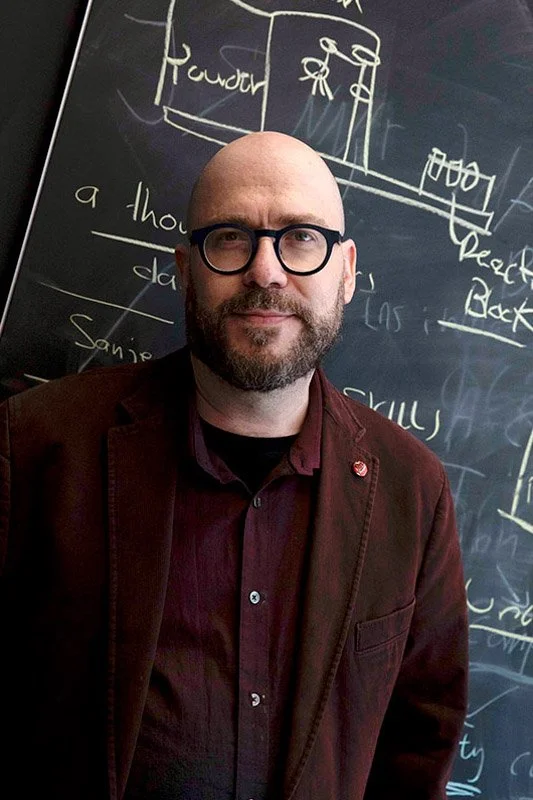
Al谩n Aspuru-Guzik (photo: supplied)
, professor of chemistry and computer science at the University of Toronto, has been a Fellow of the (RSC), one of the country鈥檚 highest academic honours.
Aspuru-Guzik joined U of T in 2018, drawn by Canada鈥檚 commitment to innovation and social democracy. He said the recognition is especially meaningful as he prepares to become a Canadian citizen.
鈥淚 decided to move to Canada and continue my career at the University of Toronto, and it was a great decision,鈥� he said. 鈥淚 love Canada in many ways 鈥� from the university culture to the city and country culture. The fact that the Royal Society of Canada selected me as a fellow is very special.鈥�
Aspuru-Guzik recently passed the Canadian citizenship test and is awaiting his citizenship ceremony. 鈥淚t鈥檚 a great thing to have happen in 2025,鈥� he added.
The RSC celebrates both academic excellence and societal impact. Aspuru-Guzik鈥檚 work bridges both, with research that advances scientific discovery and addresses global challenges.
As co-director of the with Varinia Bernales, Aspuru-Guzik leads efforts to accelerate discovery in chemistry and adjacent fields. His team contributed to the first AI-discovered lead candidate for a drug, published in , and helped pioneer organic flow batteries, featured in . Most recently, his lab demonstrated how AI and self-driving labs can accelerate molecular discovery, using organic lasers as a case study in .
鈥淥ur mission is to democratize self-driving laboratories via the ,鈥� he said. 鈥淭his work can help others develop materials for society and tackle challenges like climate change and technological equity.鈥�
In 2023, the Acceleration Consortium received the largest federal research grant ever awarded to a Canadian university. The $200-million grant by the (CFREF) supports the consortium鈥檚 work on self-driving labs 鈥� combining AI, robotics and advanced computing.
鈥淎l谩n鈥檚 work exemplifies the kind of excellence and innovation we value at U of T,鈥� said Eyal de Lara, professor and chair of the 海角视频 of Computer Science. 鈥淗is contributions have had a profound impact on both academia and society. We鈥檙e proud to celebrate his recognition by the Royal Society of Canada.鈥�
Aspuru-Guzik also mentors the next generation of researchers. His advice to early-career scientists: pursue bold, interdisciplinary questions.
鈥淔ollow what I call the Aspuru-Guzik/Whitesides rules,鈥� he said, referring to a in . 鈥淐hase unsolved, yet achievable problems that could impact humanity. Don鈥檛 follow the crowd, focus on the unknown and work at multidisciplinary interfaces.鈥�