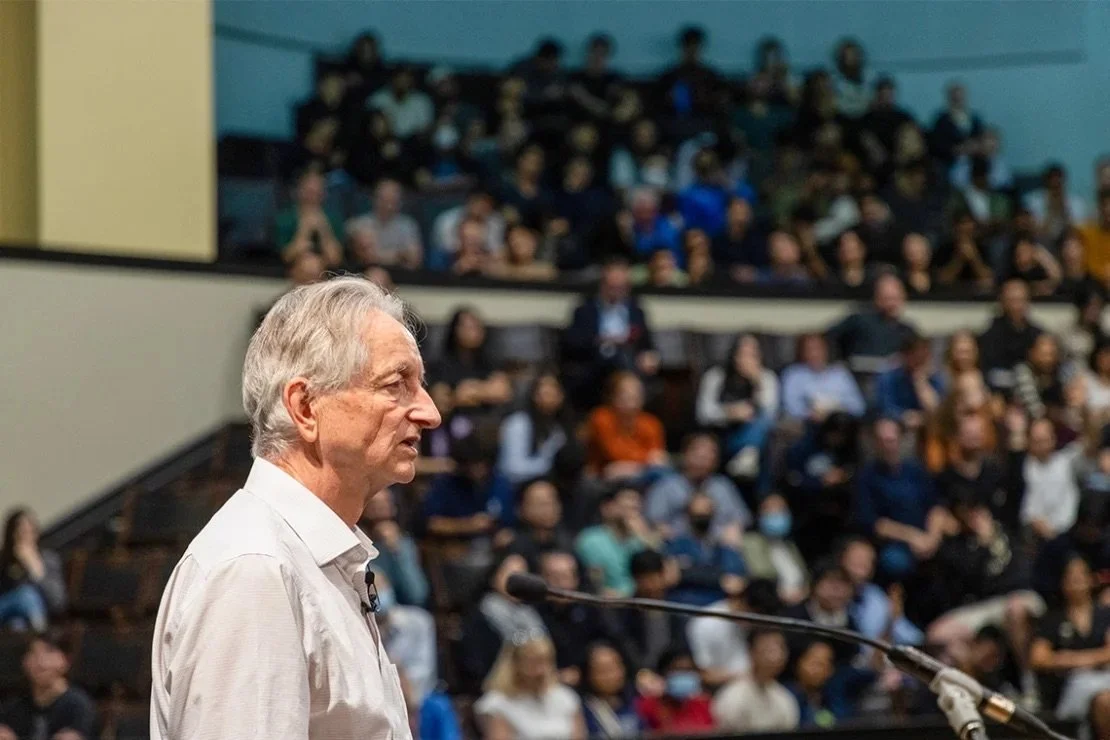
Geoffrey Hinton, a University Professor Emeritus of computer science who has been dubbed the 鈥淕odfather of AI,鈥� delivers an academic talk about artificial intelligence in U of T鈥檚 Convocation Hall on Oct. 27, 2023

Geoffrey Hinton will be giving an academic talk on artificial intelligence at Convocation Hall on Oct. 27. (Photo: Polina Teif)
After with his warnings about , will be engaging directly with researchers and scholars at a University of Toronto event.
A U of T Emeritus in the 海角视频 of Computer Science who is often referred to as 鈥渢he godfather of AI,鈥� Hinton will tackle the question during an academic talk at Convocation Hall on Oct. 27. (Tickets to the in-person event are sold out, but a recording will be shared publicly at a later date).
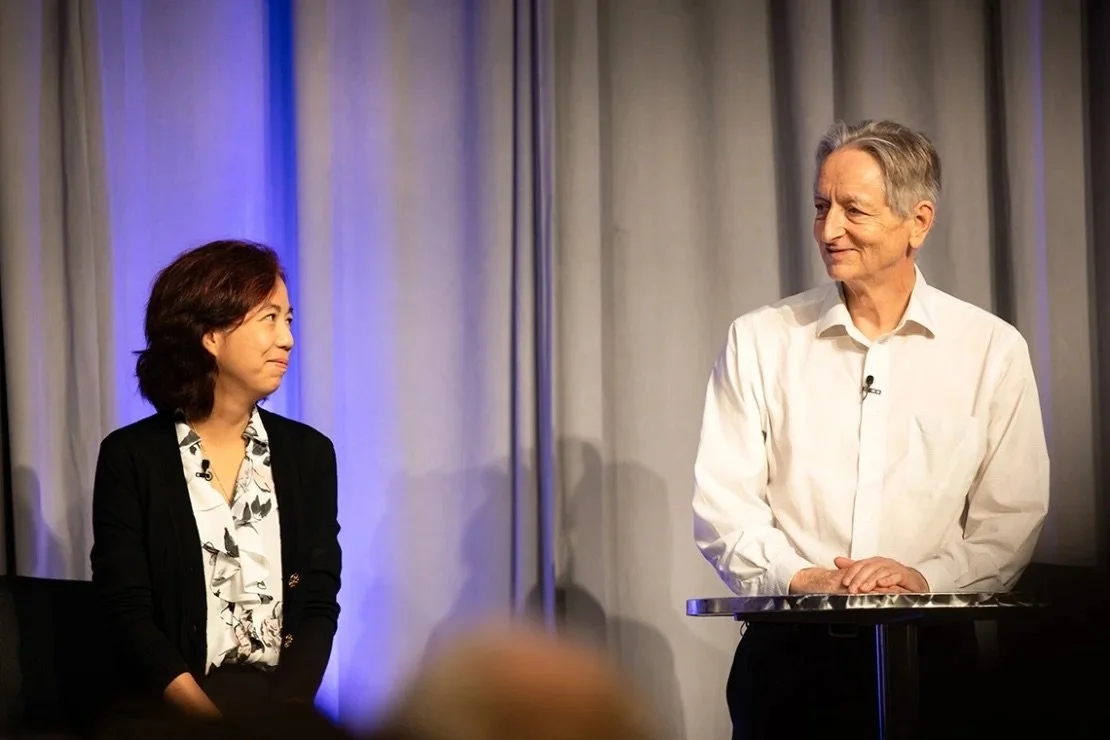
His lecture will be followed by a Q&A session co-ordinated by , a professor in the 海角视频 of Computer Science in the Faculty of Arts & Science who is a Canada CIFAR AI Chair and an associate director at U of T鈥檚 .
The session will give Hinton an opportunity to directly engage with researchers and scholars from across the university regarding the revolutionary technology he helped create.
鈥淎I is re-shaping the way we live, work and interact with each other,鈥� says McIlraith. 鈥淕iven the current public discourse about AI, it鈥檚 particularly important that scholars across disciplines learn from each other and engage in an informed exchange of views regarding the societal implications of this transformative technology.鈥�
U of T provides an ideal forum for such scholarly discourse, she adds, because of U of T鈥檚 , the 鈥渂readth and depth鈥� of expertise at the university and the city of Toronto鈥檚 position as of AI research and development.
"The conversation around AI is no longer housed in the computer science lab or within the offices of Big Tech. It needs to be multidisciplinary to advance our collective understanding of the opportunities and the potential risks so we can work to avoid the risks while benefiting from all that AI has to offer.鈥�
The Schwartz Reisman Institute for Technology and Society and the department of computer science in the Faculty of Arts & Science are co-hosting Hinton鈥檚 talk in collaboration with the and the Cosmic Future Initiative at the Faculty of Arts & Science.
鈥� Original story by Adina Bresge for
University Professor Geoffrey Hinton speaks with 60 Minutes correspondent Scott Pelley about advanced artificial intelligence. (Image courtesy of 60 Minutes)
, often dubbed the 鈥済odfather of artificial intelligence,鈥� explained the potential benefits 鈥� and risks 鈥� of the technology he helped bring into existence on CBS News鈥檚 .
A Emeritus in U of T鈥檚 海角视频 of Computer Science, Hinton told correspondent Scott Pelley about his decision earlier this year to .
The cognitive psychologist and computer scientist, whose research contributions set the stage for the current acceleration of AI development, says he has no regrets because of the technology鈥檚 enormous potential benefits. But he warns that humanity is at a 鈥渢urning point鈥� in determining AI鈥檚 trajectory 鈥� and that the decisions we make today could have far-reaching consequences for the future.
鈥淚 think my main message is there's enormous uncertainty about what's (going to) happen next,鈥� Hinton told the newsmagazine program. 鈥淭hese things do understand. And because they understand, we need to think hard about what's going to happen next. And we just don't know.鈥�
The University of Toronto鈥檚 Raquel Urtasun, a leading expert in machine learning and computer vision, is taking her startup鈥檚 self-driving technology for long-haul trucks out for a spin, with several autonomous vehicles ready to hit the road in the United States, according to reports.
The CEO and founder of Waabi told the that a handful of trucks are 鈥渞eady to be deployed鈥� with human drivers and engineers on-board for safety. In , Urtasun 鈥� a professor of computer science in the Faculty of Arts & Science and faculty member at the Vector Institute for Artificial Intelligence 鈥� said that Waabi will train the self-driving system to navigate any number of virtual scenarios using a simulator that harnesses the full power of AI.
She added that the approach gives Waabi an advantage over bigger competitors since it鈥檚 more efficient 鈥� and effective 鈥� than relying on real-world testing.
鈥淏ecause we can do everything on the simulator we are already ready with a generation that is much more advanced,鈥� Urtasun told the magazine.
Waabi emerged from stealth mode in June 2021 after in funding from Silicon Valley giants such as Khosla Ventures and Uber, as well as AI luminaries including U of T's Geoffrey Hinton, a Emeritus and Sanja Fidler, an associate professor of computer science.
Originally published on.