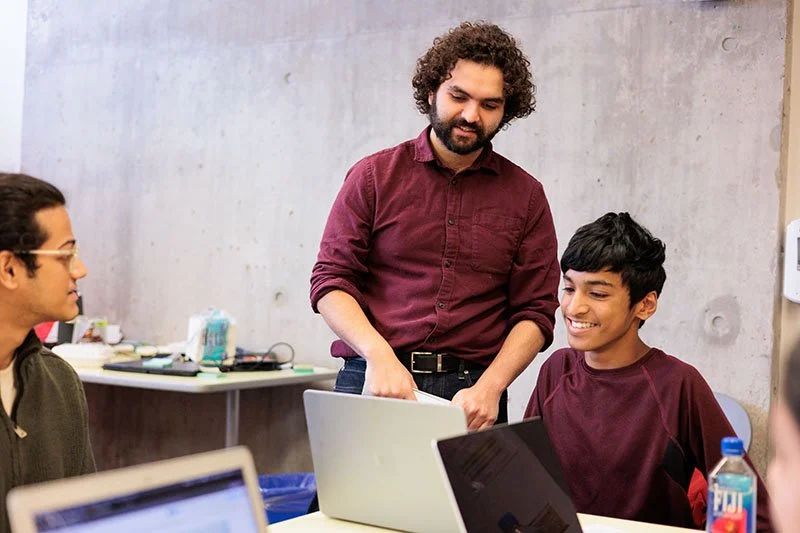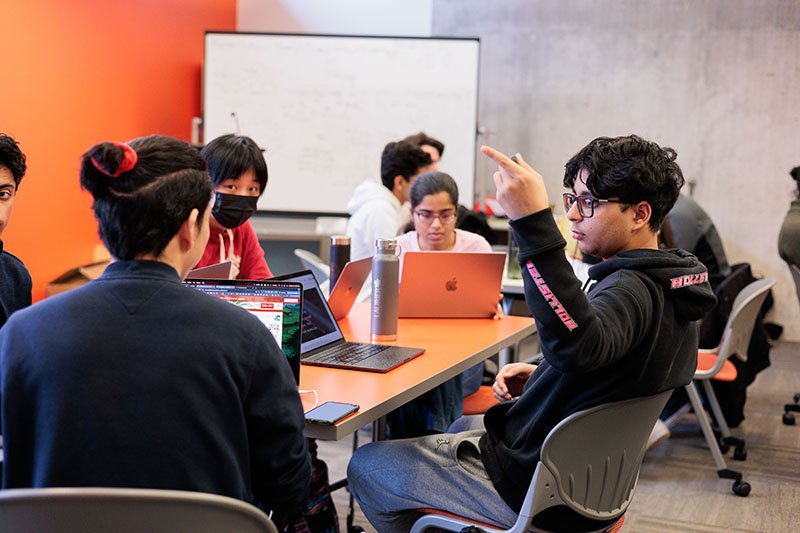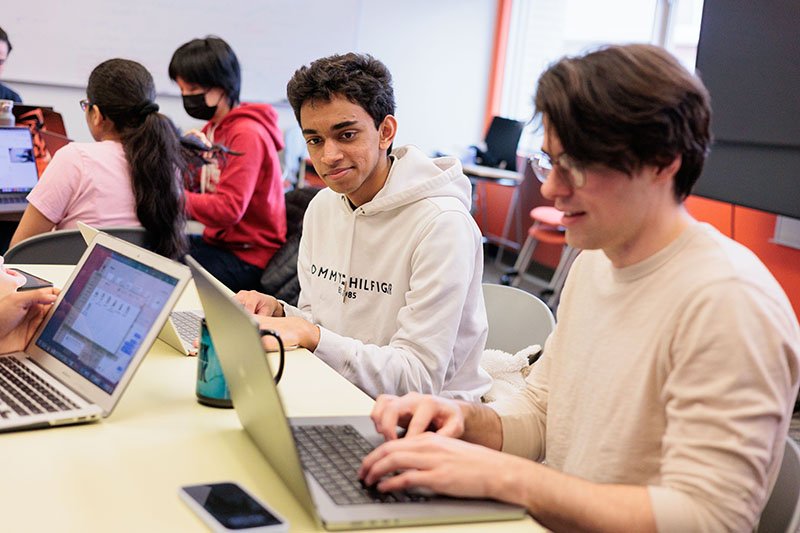


Grade 12 student Aarav Modi participated in DGP Academy where he had the chance to create a simulation of heat diffusion across a 2D plane. (All photos by Matt Hintsa)
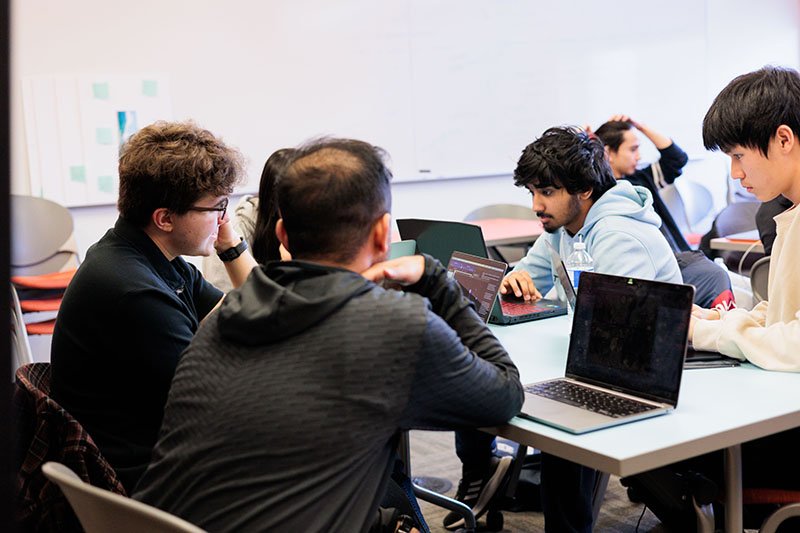
A group of 15 high school students spent their March break immersed in computer graphics research through a weeklong program hosted by the laboratory at the University of Toronto鈥檚 海角视频 of Computer Science.
Led by second-year PhD student , DGP Academy offered students in grades 9 to 12 a comprehensive view of life as a graduate student, including lectures and hands-on lab activities ranging from 3D printing to linear algebra and calculus.
The high schoolers were connected to the DGP laboratory through the , and Benchekroun envisioned the experience going beyond a typical shadow where they would simply observe the work being done by graduate students.
鈥淲e tried to make it as broad and all-encompassing of the experience as possible, so they learn the day to day but also learn some new technical skills, and some of the biggest challenges of being a graduate student,鈥� he explains.
Through his group project, Aarav Modi, 18, had the chance to create a simulation of heat diffusion across a 2D plane, employing math including calculus.
鈥淭he most prevalent place I see that it鈥檚 useful is in building sciences and structural engineering because people are leaning toward energy efficient buildings, and net-zero buildings,鈥� explains Modi. 鈥淭o find ways to keep heat and use it efficiently in a building is very important, and the fact that I did a simulation is very cool to me.鈥�
The grade 12 student says the experience showed him how the complex math concepts he鈥檚 learning now apply to computer science and coding and gave him insights into university life.
鈥淚t also introduces me to graphics, and I think graphics is something I would definitely take because even though I wasn鈥檛 considering computer science for the entire part of grade 12 now, I鈥檓 definitely going to consider it,鈥� he adds.
Benchekroun recalls his time as an undergraduate and not knowing what to expect from a graduate lab in computer science, sharing that it鈥檚 common among high school students and undergrads to not know much about the possibility of graduate studies.
鈥淚 think what makes this experience special is this really shows them what one of the best graduate labs in computer graphics and human computer interaction works like at a high level and it reaches them at a very young age.鈥�

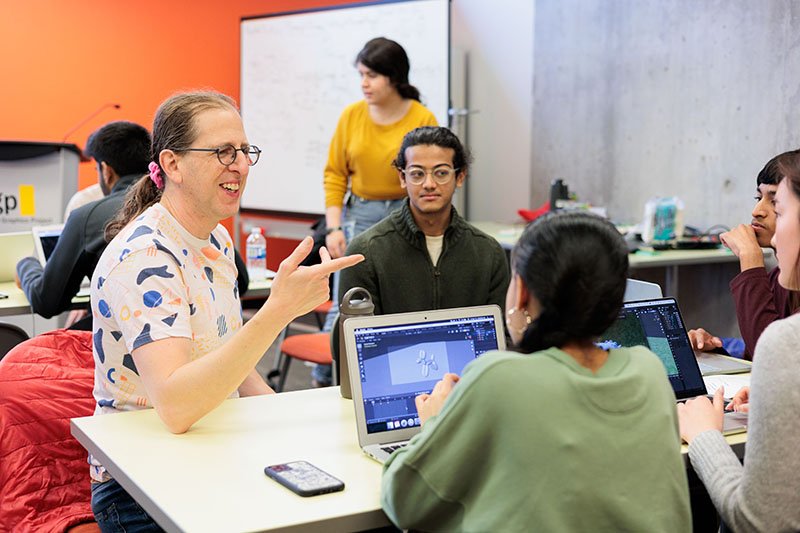
Second-year PhD student Otman Benchekroun led DGP Academy, which offered high school students the opportunity to engage in hands-on computer graphics activities and get a comprehensive view of graduate studies.
He notes this exposure to graduate studies now is important to have as the students move through post-secondary education and consider their own paths, which may waver as their interests evolve.
鈥淭he best tool that you can have when you are unsure about where you are in life and whether or not you like what you鈥檙e doing is information on what else is out there.鈥�
Learning about the different career paths in research is something that Hanna Yim, 17, says surprised her.
鈥淚 didn鈥檛 really know the difference between a master鈥檚, PhD, and the different pathways that you can pursue after your undergraduate studies,鈥� says the grade 11 student.
鈥淏ecause as someone who wants to pursue health science, the regular pathway would be going to med school. And now I鈥檝e heard some PhD students say they pursued med school, but then realized research was their thing because they had time to think and derive a solution themselves 鈥� and the whole process is rewarding at the end when you get to publish a paper.鈥�
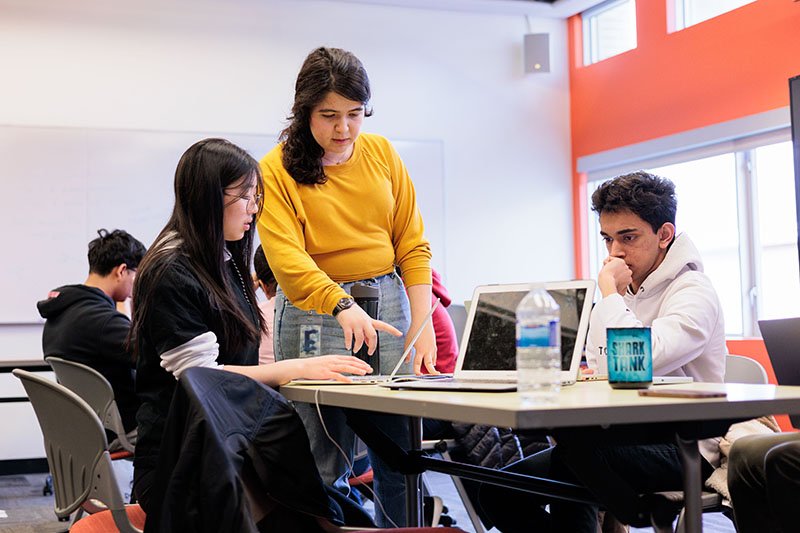
During the weeklong experience, Yim worked on a group project where she learned about keyframe animation and how to do smooth transitions using linear algebra and linear interpolation.

Grade 11 student Hanna Yim learned to create animations during the weeklong experience at DGP Academy.
鈥淭here were a lot of matrices and math we learned that was important to tell the computer in its own words that it can predict and make as an animation,鈥� she explains.
鈥淐oming here, I realized programming can be fun because most coding that we learn in school is theory based and we memorize code, but here, when we do code we have a result 鈥� we can see visually what we did, and I think that鈥檚 what boosted my interest in computer science through this lab.鈥�